BRYCE ON FREEMASONRY
Who is the Better Mason? The individual or a Lodge officer?
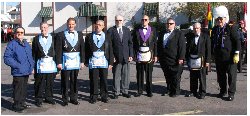 I have been wrestling with a conundrum lately regarding Freemasonry: Who is the better Mason, the person who is properly initiated, passed and raised a Master Mason and disappears shortly thereafter, or the Mason who becomes an officer of the Lodge? Let me give you my spin on it.
There may be many reasons why a Mason drops out of sight; first, his occupation may require him to work difficult hours or to cause him to move to another locale. As Americans, it is not uncommon for workers to move throughout the country. In my case, I have lived in eight different locations throughout the United States. I suspect I am not alone. The “Traveling Mason,” as I call him, still respects the tenets of Freemasonry, but is not actively involved with the workings of the Lodge, either his Mother Lodge or as guest of another Lodge. Yet, he dutifully pays his dues as is required of him.
Another reason for not attending Lodge is perhaps he devotes more time to family activities or another Masonic body, such as the Shrine, Grotto, Scottish Rite, or York Rite. The culture of the Craft Lodge may be such, the Master Mason prefers attending these other bodies instead. In other words, he finds it more rewarding to attend these other bodies than a Craft Lodge. And if the Craft Lodge is mired in politics or incompetence, the Master Mason will likely look elsewhere to invest his time.
There is also the possibility a member may have joined, become disenchanted with all of Freemasonry and dropped out of sight. This is likely the cause for the members dropped from the rolls each year under the category of “Suspended; Non-Payment of Dues.” Even under this scenario, it is unlikely the person will totally dismiss the obligations he took and the Masonic lessons he learned.
Regardless of the reason for dropping out, if the Master Mason learns the lessons of Freemasonry, takes them to heart, and uses them in his walk through life, be it at home or in business, than he is a True Mason, regardless if he has paid his dues or not.
Read: Freemasonry is Dying
As to the Masons who are officers, let us first consider the purpose of the Craft Lodge, which is to initiate new members, and to provide a venue to discuss Masonic related topics for the betterment of the Craft (aka, “Masonic Education”). There is also the matter of managing Lodge finances and assets, such as the Lodge building. This means, Lodge officers have three primary responsibilities:
- Proficient in Masonic ritual (the three degrees), as well as addressing the topic of membership. Of course, people join of their own free will and accord, but the officers should consider alternatives for communicating the virtues of Freemasonry to the public; e.g., an open house, recognizing a person or organization for their work, assisting a school or charity, etc. If the officers are not proficient in ritual, or in addressing membership, they are not doing their job competently.
- Providing Masonic Education, including such things as history, morality, charity, or contemporary subjects, such as how to use the Internet, computers, financial planning, etc. If the officers are not doing this, they are not doing their jobs competently.
- Managing finances and assets. Maintaining the Lodge building and furniture is one thing, managing the finances is another, and something commonly overlooked in many Lodges. There is no excuse for not preparing an annual audit of finances, and a budget for the new year, not unless they do not know how to perform such tasks. Lodge officers have a fiduciary responsibility to do such things as financial planning and preparing feasibility studies. If a Lodge appears to be in financial decline, it is up to the officers (and hopefully a finance committee), to determine how to raise income (such as an increase in membership dues) or lower expenses. If the officers are not doing this, they are certainly not doing their jobs competently.
Then again, I have seen far too many Lodges where a person becomes an officer for the wrong reason, such as to simply earn a Past Master’s apron and to be called “Worshipful.” Such people are in it to win accolades as opposed to truly serving the operations of the Lodge (something they are not qualified to do). Progression through the line is not a right, it has to be earned. If the person is not qualified to assume the office, he could cause considerable problems and, as such, he needs to be properly trained to assume the position, just like any other job.
In theory, the Craft Lodge is supported by the Grand Lodge who provides assistance in teaching the three primary responsibilities. However, if the Grand Lodge becomes overbearing, then the Craft Lodge will likely be encumbered by bureaucracy which is essentially no different than big government becoming intrusive in the lives of business and the individual. The Grand Lodge should serve the Blue Lodge, not the other way around.
So, who is the better Mason; the individual or the Lodge officer? Although I have known a handful of good Lodge officers over the years, professional people who know what they are doing, I have seen far too many not take their responsibilities seriously, are unqualified, thereby becoming detrimental to their Lodge and Freemasonry overall. In my mind, the True Mason is the person who has learned his Masonic obligations, implemented them in his walk through life, and respects the precepts of the fraternity. It is certainly not the person who dresses up in a tux, marches around the Lodge room, and practices politics for personal glory.
Freemasonry is a fraternity, not a club. It is a beautiful logical concept that is often physically implemented poorly.
Keep the Faith!
Note: All trademarks both marked and unmarked belong to their respective companies.
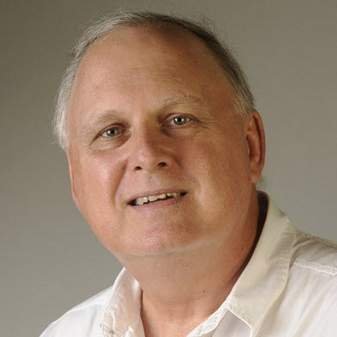 Tim Bryce is a writer and the Managing Director of M&JB Investment Company (M&JB) of Palm Harbor, Florida and has over 30 years of experience in the management consulting field.
He can be reached at timb001@phmainstreet.com
For Tim’s columns, see: timbryce.com
Like the article? TELL A FRIEND.
Copyright © 2014 by Tim Bryce. All rights reserved.