I first wrote this article for FreemasonInformation.com back on March 11th, 2007. We tried it in my own Lodge shortly thereafter with remarkable results. The Craft was able to voice their opinions in a controlled environment, thereby stimulating participation and attendance, and helped officers adjust their plans for the Lodge. I hope you find this as beneficial as we did. This article is also included in my book, The Freethinking Freemason – Collected Masonic Works of Tim Bryce .
.
Shapeth Up and Geteth thy Act Together.
From time to time I get asked to speak on a variety of subjects pertaining to Freemasonry (my personal favorite is to talk on subjects related to “True Masonry”). I also hear from a lot of frustrated Brothers who want their Lodges to finally address the true problems they are faced with as opposed to passing the buck another year (and to another corps of officers). To this end, I offer the following planning seminar you can implement yourself (after all, I can’t be everywhere). I have used a similar format for business meetings and seminars over the years.
For this type of session, the moderator is more of a facilitator as opposed to preaching his own personal points of view. The intent is to stimulate thought in terms of ways of solving Masonic problems as a collective whole, engage the group and overcome apathy. As such, it is primarily intended for a single Lodge, but could easily be applied to larger groups, such as districts, zones, etc. Chapters of allied and appendant Masonic bodies might also find this applicable as well.
Critical to success is the right venue: this is something that cannot be performed in a couple of minutes, but rather as a special meeting, either at a called communications, or perhaps a special after-breakfast, lunch, or dinner session. Whatever venue you select, the session should be properly promoted in order to get the group dynamics you want. For example, you may want to bill this as a brainstorming workshop, a Lodge conference, a think tank, or whatever to attract both the workers and the casual sideliners of the Lodge. Again, this session is geared to force the participants to think and hopefully act.
Setup
Ideally, this should be conducted as a roundtable discussion so the participants can see one and other, but a classroom or Lodge room setting will also work. The moderator (facilitator) will be summarizing the results for all to see and, as such, use either a blackboard or flip chart, or perhaps an overhead projector and screen. In addition to the moderator, he will need an assistant to help tabulate the paperwork.
A sign-in sheet is also required, for people to PRINT their names, telephone numbers, and e-mail addresses. This will become important later on when asking for volunteers. Five small slips of paper (index card size) and pencils should be provided to each participant.
Selecting the moderator is important. Although an elder from the Lodge can perform this duty, perhaps an outside Brother who is unbiased may be more suitable (which is where I come in). I do not recommend a sitting Lodge officer to lead the session as he may influence the outcome; nor do I recommend a sitting Grand Lodge officer, such as a District Deputy/Inspector, as they represent the interests of the Grand Lodge and not the Craft Lodge. Ultimately, the person selected as moderator must be someone the Lodge respects, trusts, and cannot be intimidated or browbeaten.
Now for the actual seminar itself:
Introduction
As with all great and important undertakings, begin the meeting with a blessing to deity and a pledge to the flag. Such formality sets the tone for the meeting.
The moderator should be introduced by the Worshipful Master, along with an explanation of his Masonic background. The moderator then explains his role as facilitator, not teacher. Basically, the moderator is there to lead the discussion, govern the meeting, and summarize results; nothing more.
Next, the moderator describes the purpose of the seminar which is to collectively brainstorm to find new and imaginative ways to improve the Lodge (with the keyword being “collectively”). Stress the need for participants to express their opinions candidly and openly; all suggestions are welcome and no idea should be considered irrelevant. But it should be made clear to the attendees that this will be the time to express their concerns over the direction of the lodge (time to speak up or shut up). Discourse should be conducted Masonically (respectfully and professionally). It is strongly suggested the moderator govern by gavel. Please keep sidebar discussions to a minimal and, ask attendees to stand up when addressing the group, not to ramble and get to the point.
The seminar is structured in a particular way. Without structure, the meeting could easily get out of control quickly and be counterproductive. Basically, attendees will be given small slips of paper where they will be asked to answer specific questions. Their answers should be brief. Attendees will then share their answers with the group and the moderator will draft a summary answer for each question which the group will vote to accept (majority rule).
Questions
Attendees should prepare brief answers to the following questions. Please note, these questions should be asked one at a time (not all at once).
What Does Freemasonry Mean to you on a Personal Level?
This first question is a good icebreaker and the answers may be somewhat startling to attendees.
Typical answers include:
- Brotherhood
- Camaraderie
- Networking
- Community Service
- Support Network
- Education
- Morality
- etc.
More than anything, this question is designed to get the attendees to open up a bit and start thinking. It also gives them a framework for answering the remaining questions candidly and honestly.
Have each Brother read his answer aloud and afford him an opportunity to briefly explain himself.
Devise a summary answer the group can agree to on a consensus basis (vote to accept it).
Provide a Brief Definition of What Freemasonry Is
Have each Brother read his answer aloud and afford him an opportunity to briefly explain himself.
Here you will start to see how the Lodge perceives Freemasonry, right or wrong.
You’ll hear answers like:
- Club
- Nonprofit group
- Fraternity
- Society of friends and Brothers,
- etc.
As moderator, you are trying to define the Lodge’s focus. Ask attendees to clarify their responses if necessary.
As moderator, allow some dialog here for attendees to articulate their answers. It is important to arrive at a precise definition. This is also useful to clear up some misconceptions about what Freemasonry is (and isn’t). You can also utilize the free ebook What is Freemasonry? to stimulate the discussion.
Devise a summary answer the group can agree to on a consensus basis (vote to accept it).
Provide a Brief Definition of the Purpose of a Masonic Lodge
This is a good follow-up question to the last. Many people take their Lodge for granted and do not think about its purpose. There will be those who feel a Lodge is nothing more than a social venue, others will see it as a meeting place (if so, “What kind of meetings?”), and yet others believe it is intended to propagate the philosophy of the fraternity. In reality, there is no “right” answer. Again, it comes down to the perception of the Lodge.
One clever question the moderator can pose here is, “Suppose you didn’t have this Lodge building; would you still be a Masonic Lodge and, if so, what would your activities include?” This, of course, is intended to get the attendees to think beyond the physical implementation of the Lodge and focus on its purpose.
Devise a summary answer the group can agree to on a consensus basis (vote to accept it).
What are the Three Highest Priorities Facing your lodge Today?
Now that we have defined what Freemasonry and a Masonic Lodge is, we can now concentrate on establishing the top priorities of the Lodge. Inevitably, this will lead to an interesting dialog of the problems of the day, but as moderator, encourage them to think beyond problems but to also consider opportunities. Also, try to differentiate between problems and symptoms. In many cases, people confuse the two. Your intent is to properly define true problems.
Inevitably, you will hear things such as: membership, harmony, politics, finances, maintenance of the Lodge building, Masonic education, administrative concerns, relations with Grand Lodge, etc. In fact, you may develop a long laundry list of problems/opportunities to be addressed. The hard part will be to force the group to agree on the top three priorities.
Devise a summary answer the group can agree to on a consensus basis (vote to accept it).
What Should be Done to Address these Priorities?
After the top three priorities have been established, you are now asking the attendees to devise a strategy to address them. At this point, do not try to solve the problem definitively; by doing so, you may end up wasting a lot of time. Instead, your intention is to simply set the wheels in motion (such as establishing a committee to address the priority). Also, do not put the full burden on the Lodge officers to implement the strategy but, rather, encourage group participation as well.
Devise a summary answer the group can agree to on a consensus basis (vote to accept it).
Who is Willing to Stand Up and Make this Happen?
This final question sounds rather simple but such histrionics are useful for applying peer pressure on the attendees to literally get off of their duffs. Inevitably, all of the attendees will stand in support of the conclusions (after all, they wrote it). But now and then you will find a couple of stick-in-the-muds who refuse to stand. This is rare but in this event, the Lodge officers should meet with the individual separately to determine what problem, if any, the person may have.
Conclusion
Distribute a critique sheet to all attendees at the end of the meeting to evaluate the seminar. Keep it simple and to the point; for example:
- What was the MOST VALUABLE part of the seminar?
- What was the LEAST VALUABLE part of the seminar?
- Grade the Moderator’s performance (1-high to 5-low).
- Would you recommend this seminar to other Lodges? (Yes/No)
- Other comments and observations.
- Provide room for their Name.
The critique sheets should be reviewed by the Moderator and pertinent Lodge officers, particularly the Worshipful Master.
The Moderator’s final task is to write a follow-up report for the Lodge Officers which summarizes the five questions, and allows the Moderator to add any pertinent concluding comments and observations. The answers produced by this seminar may very well be an eye-opener to the Lodge officers who may be operating and leading the Lodge along a different path. This seminar will either reaffirm the Lodge is going in their direction or that a new course should be charted. The officers would be wise to heed the report as it represents the perceptions of the Lodge overall and not just a couple of people. Nonetheless, the Worshipful Master will steer the Lodge as he sees fit. However, should he decide to move the Lodge in a totally different direction, he should recognize he may not have the support and cooperation of the Craft. Following the seminar, the Lodge officers would be well advised to do some soul-searching; should they continue on their current path without the support of the Craft or go in a new direction?
Bottom Line
This seminar is useful for establishing common ground on the problems and opportunities facing the Lodge and how to best address them. As humans, we tend to have different perceptions and interpretations of a problem. Seminars such as this are intended to clearly define the problems in terms all can understand and accept, thereby providing the means for getting everyone to row in the same direction. Further, it sends a message to the Craft that their voice is not irrelevant and that everyone has a role to play. If people believe their voice is heard, they will be more inclined to cooperate and work. As such, apathy is thwarted and teamwork promoted. In other words, we can finally get people “who can best work and best agree.”
Keep the Faith.
Note: All trademarks both marked and unmarked belong to their respective companies.
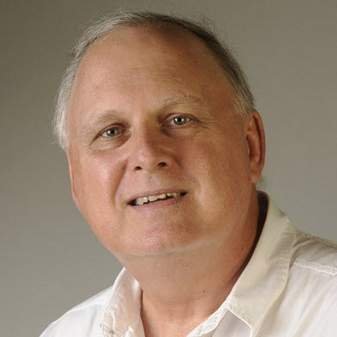 Tim Bryce is a writer and the Managing Director of M&JB Investment Company(M&JB) of Palm Harbor, Florida and has over 30 years of experience in the management consulting field. He can be reached at timb001@phmainstreet.com
For Tim’s columns, see: timbryce.com
Like the article? TELL A FRIEND.
Copyright © 2007, 2015 by Tim Bryce. All rights reserved.
Listen to Tim on WJTN-AM (News Talk 1240) “The Town Square” with host John Siggins (Mon, Wed, Fri, 12:30-3:00pm Eastern); WZIG-FM (104.1) in Palm Harbor,FL; and KIT-AM 1280 in Yakima, Washington “The Morning News” with hosts Dave Ettl & Lance Tormey (weekdays. 6:00-9:00am Pacific). Or tune-in to Tim’s channel on YouTube.