Is it a club, a corporation, a religious cult, a PAC, a philanthropy, or a fraternity?
BRYCE ON THE MASONS
In the many years I have been a member, I have always found it fascinating how people perceive the institution of Freemasonry. Some say it is a club, others see it as a philanthropy, but very few seem to understand the concept of fraternity. Further, when we investigate candidates for membership, we normally ask what they are looking for, but rarely do people comprehend precisely what they are joining. This is a compelling argument, one I’ve debated on more than one occasion.
Some of our members see Freemasonry as nothing more than a club, such as a garden club, sports club, country club, etc., an institution we join with some common activity or goal. Clubs are typically run by a set of officers who participate in order to receive some notoriety for their position. This, of course, leads to politics involving backscratching, deceit, backstabbing, and one-up-man-ship. It is not uncommon to find people in such positions who have done nothing of substance in their professional lives and now relish the opportunity to control others. In Freemasonry, we are taught members are all equal in terms of position and opinion. The officers in a Lodge represent a network of duties and responsibilities designed to be implemented by many people, not just one, thereby encouraging teamwork, and eliminating the need for autocratic rule.
There are those who see Freemasonry as a corporation. The problem here is that a corporation is designed to be profitable in nature, Freemasonry is not. True, there are advantages to running any institution like a business, particularly by the state who requires all organizations to run as such, but Freemasonry certainly has no mercenary objectives other than the betterment of its members.
Despite the warnings of conspiracy theorists, Freemasonry does not preach dogma, nor practice religion. A person must believe in a Supreme Being to become a Mason, but his choice of religion is his business, not the Masons. As such, it is not uncommon to sit in a Masonic Lodge with men of many different faiths, thereby promoting religious tolerance.
Freemasonry is not a Political Action Committee (PAC). In order to maintain harmony in the Lodge, politics and religion are two topics forbidden from discussion. Like religion, men of different political beliefs sit in Lodge together in harmony. If anything, Freemasonry promotes the concept of citizenship to the community and patriotism to the country. Those who violate the law and believe in the overthrow of the government by force are not permitted to become Masons. Masons are law-abiding citizens who are taught to use peaceful means to change the government if necessary. As such, Masons hope to become role models for the community.
Perhaps the biggest misconception is that Freemasonry is a philanthropy. It is true Masons give generously to help others in distress, but this is a peripheral goal. It is not intended to spend countless hours on fund raisers or to shake down the Brethren for every available penny. Masons help others if it is within their capacity to do so. Otherwise there is no mandate in Freemasonry to perform philanthropic work. If Masons spend more time on philanthropy than fraternity, then they are subverting the intent of the institution.
Instead, Freemasonry is a fraternity; the original fraternity, and the model for others who came much later, such as college fraternities. The term “fraternity” comes from the Latin word “frater,” meaning “brother.” Fraternity, therefore, is a brotherhood, an environment of companionship dedicated to the social development of its members. The basic tenets of Freemasonry are “Friendship, Morality, and Brotherly Love.” As such, it is designed to build character, devotion, and encourage its members to lead an honorable life. Attending a Masonic Lodge meeting is intended to act as a fortress of solitude for its members, both local and visiting Masons, where they can meet and find solace away from the vermin and troubles of the world. It is a place where men seek understanding, compassion, and to be treated fairly and honestly.
Education is of significant importance in a Masonic Lodge, where Brothers ponder past, present and future problems of morality, responsibility, compassion, and civility. We refer to this as seeking “further light.”
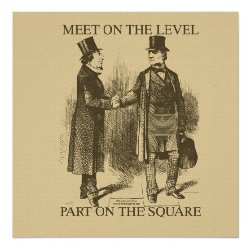
Freemasonry, therefore, is not a club, a philanthropy, a religion, or a PAC. Using symbols from ancient operative Masonry, Freemasonry is a place where men meet “on the level” (to promote equality), act “by the plumb” (rectitude of conduct), and part upon “the square” (to practice morality). For many centuries, Freemasonry is the fraternity where men of character have naturally gravitated to, simply because they yearn for such simple treatment.
Those who think of or practice Freemasonry any other way are missing the boat.
Keep the Faith!
Note: All trademarks both marked and unmarked belong to their respective companies.
Read A Response to Tim Bryce’s What is Freemasonry? and A Response to Tim Bryce & Greg Stewart
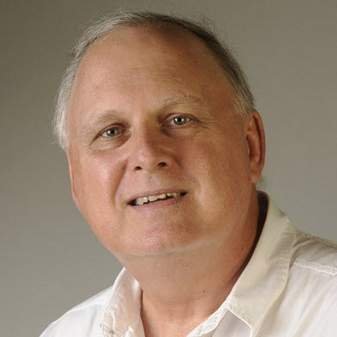
Tim Bryce is a writer and the Managing Director of M&JB Investment Company (M&JB) of Palm Harbor, Florida and has over 30 years of experience in the management consulting field. He can be reached at timb001@phmainstreet.com
For Tim’s columns, see: timbryce.com
Like the article? TELL A FRIEND.
Copyright © 2014 by Tim Bryce. All rights reserved.
Tune-in to Tim’s channel on YouTube.