Observations on the esoteric from author Greg Stewart (Masonic Traveler) about the fraternity of Freemasonry, its impact on civil society and contributions to the material culture.
It is true without lies, certain and most true;
That which is below is as that which is above,
and that which is above is as that which is below,
to accomplish the miracle of the one thing.
It is true without lies, certain and most true;
That which is below is as that which is above,
and that which is above is as that which is below,
to accomplish the miracle of the one thing.
Tabula Smaragdina
One of the most extensive collections of esoteric work is in jeopardy of being dispersed into the hands of private collectors.
The Ritman Library, known as the Bibliotheca Philosophica Hermetica comes from the private collection of books by businessmen Joost R. Ritman who turned his private collection of manuscripts and printed works in the field of Hermeticism into a library of the Hermetic tradition, to show the interrelatedness between the various collecting areas and their relevance for the present day study.
Today, the renowed Bibliotheca Philosophica Hermetica (BPH) is in grave danger because of a financial conflict with Ritman, and the Friesland Bank.
An online petition has been started to save the library, which you can sign here, and chronicles the dissolution of the library, saying:
It is widely known that the Bibliotheca Philosophica Hermetica in Amsterdam, was in great danger in the 1990s, when the ING bank took possession of the collection and threatened to sell it. Fortunately, the Dutch government intervened: the BPH was put on the list of protected Dutch heritage, and the State eventually acquired over 40% of it. The books remained at the same physical location, integrated with the rest of the collection, and the government would eventually acquire all of it.
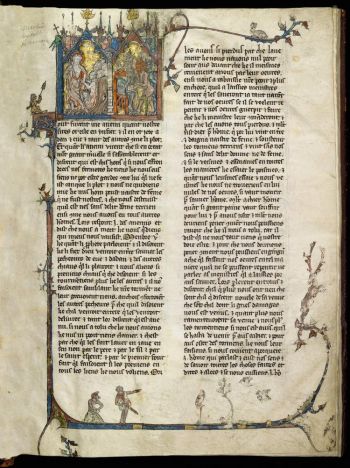
The manuscript was likely written for one of the leading aristocratic families of Medieval France (circa 1315-23) and is now expected to sell for $2.49 to $3.23 million.
As part of this process, there were great plans for further expansion. Largely due to the financial crisis and a change of government this was taking somewhat longer than originally anticipated, but nobody doubted that the library was safe.
Last week this turned out to be incorrect. An extremely valuable medieval manuscript owned by the BPH (The Grail of Rochefoucauld – the oldest known Arthur Manuscript) was put on sale at Sotheby’s, and this triggered a reaction from the Friesland Bank, which took possession of the library, that had apparently been brought in as collateral, in order to get back a 15 million euro loan from mr Ritman.
At present the BPH is closed, and intense negotiations are going on behind closed doors. It is impossible at this moment to predict the outcome, but there is no doubt that the situation is extremely serious. There is a very real possibility that the Friesland bank will try to sell at least 60% of the library that is still owned by Mr. Ritman, and nobody knows what implications this will have for the rest of the collection and the BPH as a whole, including its staff. The brand-new government of the Netherlands has announced a program of radical financial cuts in the culture section and elsewhere, which makes a renewed intervention from that side highly unlikely.
It continues saying:
If the Ritman library would go down, this would mean an enormous blow to international scholarship in hermetic studies. The damage would be irreversible. By signing this petition you express your concern, and ask the Dutch government and the Friesland bank to do their utmost to ensure that the collection will be saved and will remain available for the international scholarly community.
What you can do.
Its a challenge to say what one can do in such an situation, but there are some things one can do to express their concern.
Sign the petition to save the Library.
Send an email/letter to Friesland Bank in protest of the sale and dissolution of the work. You can send to: Headquarters
Friesland Bank Postbus 1 Friesland Bank PO Box 1
8900 AA Leeuwarden 8900 AA Leeuwarden
Call the Friesland Bank Press Officer
at Pers Press
Press Officer
Persvoorlichter Press Officer
Saskia Toor Saskia Toor
(058) 299 44 23 (058) 299 44 23
06 51 50 56 00 06 51 50 56 00
Send them a message at their Friesland Bank contact page here
or call them at +31 58 2994499
Encourage your academic institution to join the growing list of Professors and Academic institutions in support of the study of the Hermetic tradition and the preservation of the library. You can see a list of those who have already signed the petition here.
Also, if there is consideration of private investment in the library, contact me and we can organize a mission to help preserve the collection. Email me at masonictraveler@gmail.com
You can see by their Guide the bredth and work of the collection.
In the colelction of work, you one can study and explore the depth of Hermetic study, which the library has divided into the following principal collecting areas:
Hermetica
Alchemy
Mysticism
Rosicrucians
Gnosis & Western Esotericism
I HERMETICA
This collecting area contains works attributed to Hermes Trismegistus, other neo-Platonic works, patristic testimonies to the Christian reception of Hermes and works testifying to the influence of the Hermetica from the Early Middle Ages through to the present day. Placed at the beginning is a general section with relevant historical studies.
Works range from antiquity to modern day.
II ALCHEMY
The general section at the beginning contains a great number of art historical works and plate books on the subject of alchemy and its symbols. There are also specialized periodicals in the field of alchemy available, such as Ambix and Chrysopoeia (both complete).
A number of source texts and secondary works from Greek, Oriental, Arabic and Jewish, to Midieval and Western Alchemy.
III MYSTICISM
The BPH particularly collects medieval and later Western mystics having a demonstrable affinity with Hermetic thought, amongst whom Meister Eckhart, Suso and Tauler.
From early mysticism to mystical spiritualism through the centuries, the Library has a wide collection of works to research from, including a selection on Sufism.
IV ROSICRUCIANS
The Rosicrucian Manifestoes (Fama fraternitatis, Confessio fraternitatis and Chymische Hochzeit) were printed in addition to the original 17th-century editions, the BPH holds several modern editions, ranging from facsimile editions to annotated text editions, and various translations, amongst which Spanish, English and French.
The BPH collection spans work from the original Manifestos to more modern workings of the S.R.I.A, Max Heindel’s Fellowship, A.M.O.R.C., O.T.O./O.R.A., and other relevant developments.
V GNOSIS & WESTERN ESOTERICISM
This principal collecting area includes various currents in addition to Hermetism, Alchemy,
Mysticism and Rosicrucians which express a spirituality mainly manifesting itself outside the confines of the institutionalized religions. At the same time they feed and reinforce the core of the collection.
This branch of the collelction includes works of comparative religion, egyptology, pre-Christian cults, Early Christian practice, the Nag Hammadi Library both pre and post materials, Gnostic both past and present, Manichaeism, Theosophy, Anthroposophy, Non-Western philosophy religious traditions, Esotericism, Grail, Catharism, Kabbalah, Judaica, Qumran, Freemasonry, the Templars, and Christianity.
Needless to say, the collection is both extensive and necissary for modern study of the Hermetic Tradition.
The ‘Way of Gnosis’ or the ‘Way of Hermes’ leads to this ultimate goal: the experience of divine reality, which cannot be learnt, but can only be personally experienced (gnosis). Therefore, if one has knowledge, he is from above. If he is called, he hears, he answers, and he turns to him who is calling him, and ascends to him. And he knows, in what manner he is called. Having knowledge, he does the will of the one who called him, he wishes to be pleasing to him, he receives rest. Each one’s name comes to him. He who is to have knowledge in this manner knows where he comes from and knows where he is going.
From: The Gospel of Truth by the gnostic Valentinus,one of the texts found at Nag Hammadi
Take a minute and sign the petition, and if you are passionate about the library, take the extra step and send a note to save the collection.
The Backyard Professor takes on the assertion that the Mormon church is threatened by Freemasonry.
He points out some very good points in the discussion. It does lend itself to an assumption that Mormonism is true branch of Christianity. I wonder how the same argument would be approached from a traditional Christian point of view. Does Mormonism then take on the vestments of Masonry if it is not seen as a revealed truth to Joseph Smith?
The NY Daily News ran a wider story in the Friday edition of the paper in which the Ugly Betty bit actor confessed and described his role in the murder of his mother earlier in the week.
Of the event, Brea is reported as saying he had descended into a world filled with Masonic symbolism and black magic, that began Sunday (11/21). While asleep, he says, God came to him over his bed and reached an arm into him saying “…today is your last day” to which Brea asked if he coudl say goodbye to his family.
It turns out that Brea, had recently petitioned a Harlem Prince Hall Masonic lodge a week earlier. In that intersection, Brea claims to of encountered a man who, Brea claims, was attempting to put a curse upon him by attempting to put an item into his [Brea’s] hand, saying “It was a Freemason pin. I wouldn’t touch it”
(As a side note, Prince Hall, like Regular Mainstream Masonry, seldom comments on events like this, as it is perceived as a negative on the Fraternity)
The experience, Brea claimed, felt like being Neo from the Matrix, and lead to some sort of episode in which the interview says Brea was hearing voices and feeling powerful.
The weapon that he used to slay his mother was stolen from the Masonic Lodge, with Brea insisting that it was a past family heirloom handed down by his father.
the day of the murder, Brea had arranged candles and votive cards about himself along with the sword. Believing his mother was conducting a black magic ritual, he says he heard her speak in a “different voice” saying “She had the voice of the demon.” when he attacked her with the sword thinking she was a demon.
The attack went from room to room and continued while police arrived at the door.
Brea saying “I didn’t want to kill her right away. I wanted to give her time to get right with God,”
“I was slashing my mom and I heard the police knocking on the door yelling, ‘Michael, open up, Michael, open up,’ but I knew they wouldn’t open the door and stop me because the spirits were protecting me,” he said.
“I just kept cutting her. No one could stop me. I was doing the work of God,”
The Daily News story reports that Brea “…stood amid the carnage with the sword in one hand and a Masonic Bible in the other.”
At the end of the piece, it quoted Brea as saying
“Grand Architect of the Universe means God,” he said, referring to an expression neighbors said he shouted as he was being removed from the bloody scene. “I was praising God. To you it might sound silly, but in my culture demons are very real.”
Read the full story, and be mindful, there are some gruesome crime scene photos included.
Its been reported that Michael Brea, a some time actor on the ABC program Ugly Betty, used a Masonic Sword, like this one from Amazon, to fatally stab his 55 year old mother, Yannick Brea, while shouting bible verses and yelling repent and “…architect of the universe…”
An actor who had a part in “Ugly Betty” repeatedly stabbed and killed his mother with a Freemason ceremonial sword after a bizarre religious diatribe this morning, cops said.
…”I heard a shriek and a woman yelling ‘help me’,” Vernal Bent said. “We called 911 and we kept hearing screams and then we didn’t hear them any more. Michael was chanting Biblical phrases and kept calling for Moses, Jerusalem and the ‘architect of the universe’.”
Without a doubt Brea was acting on his own and in a deranged fashion. Masonry in no way suggests or condones this practice or activity, and despite his use of weapon and any words uttered, it is in no way a Masonic act.
Figures often beguile me, particularly when I have the arranging of them myself; in which case the remark attributed to Disraeli would often apply with justice and force: "There are three kinds of lies: lies, damned lies and statistics." - Mark Twain - from the North American Review
I was plugging in some numbers from the MSANA recently to update myself on the trend in membership from my original analysis in 2007, the results of which I published in the piece “So what? The Dynamic of Masonic Membership.”
In it you may, or may not want to, recollect the trend of membership numbers from 1960 to a projected 2010. In the piece, the numbers ran in a more or less steady declination of 20% per decade at an increasing clip.
Given our proximity to the fiscal 2010/2011 calendar, I wanted re-calculate the numbers for 2010, and there is some good news to report, but not without a dire observation.
In the last 10 years, the original work projected a 29% decline, but a recalculated 2010 projection (adding in 1999 in lieu of 2010’s numbers) value comes back at only 26% declination. A 3% change is not enough to turn the tide, but it may offer a glimpse of a changing trend which might push out further projected losses based on continued work to increase that change. Or, the 3% change might just represent a smaller pool from which to pull total losses from, reflecting the overall drop in membership – Fewer members to lose from equating to a lower members loss.
The numbers trued up like this:
1999 to 2000
1,902,588 1,841,169 -61419 -3.2%
2000 to 2001
1,841,169 1,774,200 -66969 -3.63%
2001 to 2002
1,774,200 1,727,505 -46695 -2.63%
2002 to 2003
1,727,505 1,671,255 -56250 -3.25%
2003 to 2004
1,671,255 1,617,032 -54223 -3.24%
2004 to 2005
1,617,032 1,569,812 -47220 -2.92%
2005 to 2006
1,569,812 1,525,131 -44681 -2.84%
2006 2007
1,525,131 1,483,449 -41682 -2.73%
2007 to 2008
1,483,449 1,444,823 -38626 -2.60%
2008 to 2009
1,444,823 1,404,059 -40764 -2.82%
Total Decrease -498,529
– 26% 1999 – 2009
Equating to a 26% net loss – less than the two preceding decades, 1990 – 2000 and the projected 29% at the time of writing the original piece in 2007, which is good news. However, before celebrating, the total loss still represents the overall change in data to fall into the established parameters of an in excess of 20% loss moving into the second decade of the 21st century.
An interesting note, the Grand Lodge of New Mexico and the Grand Lodge of Rhode Island both held positive gains in the 2008/2009 fiscal years with increases of 16 and 143 new members (respectively) over their loss, so clearly these two states are doing something in the right direction.
In the original, I made this observation:
The overall calculation led to an extrapolation, if the fraternity lost on average 560,152 members, per decade – from 2010 to 2020, our national number of members would be under 1 million members at 738,303. In ten more years 2020 to 2030 our national member base would be 178,151.
With the data trending in that manner from 1999 to 2009, it would seem that the observation is bearing out with little change, the 20%+ drop rate is trending right as predicted.
OK, maybe the title is presumptive, but I couldn’t resist the hook especially given its coming from the Scottish Rite.
Where it comes from is a review that mentions the iconic Bruce Dickinson, of Iron Maiden fame, and the intelligent and modern Alchemist – Timothy Hogan, both very good company to be in.
This is a great little book. A non-Mason friend saw it on my table and asked to borrow it. He brought it back two days later, asked some questions, and told me he was going to petition the lodge in his home town. I enjoyed all the essays in the book, but especially XVII, on the E.A. Tracingboard. I am a bit more optimistic (or perhaps a bit more in denial) than Bro. Stewart when it comes to the future of the fraternity, but no one can deny his essays are thought-provoking and powerful.
My thanks to the AASR and to Br. Tresner for the kind review and, from the sounds of it, the soon to be brother it will make.
Imagine what it could do on your coffee table. The Masonic Traveler is available on Amazon.
The Small Town Texas Mason E-Magazine has an excellent article going out in the November 2010 edition. The publication comes from the heart of a brother who publishes it to “enlighten, educate, and entertain Masons and non Masons alike.” Like so much of Masonic publishing it is a free press to circulate Masonic thought and interest.
In the November issue, the publisher Corky Daunt asks the question:
Is Freemasonry’s reputation was being harmed by to many news stories in newspapers and being repeated on the internet about Freemason bringing Civil Lawsuits against Grand Lodges for Masonic reasons.
He reserves his conclusions and posts instead three responses sent in by readers on the subject, two from North America (one from our very own Fred Milliken) and one from Australia. The relevancy of the question is an important one and something this site has been charged with repeatedly as reporting (or editorializing) on the bad in the news.
At the end of his piece, Corky asks “Do you think bad publicity is harming Freemasonry’s image?”
To be honest, I would have to answer and say that it is. But, with the caveat that the press and editorializing is only so bad as the reality of the events taking place themselves. Because there is no system to mitigate these events that lead to the bad press they are left to spiral out of control in an increasingly close world.
In other words, there is no system to police the system itself, so a free press (as with Democracy) needs to exist so as to ensure that the system adheres to its own principles.
The question then becomes is the system of Freemasonry of such importance that it needs such a medium to keep watch of its practice, or is it merely a membership organization like an athletic club like the YMCA or a big box shopping warehouse like Costco or Sam’s Club, where the membership value we get comes in the commodities we take away from it.
Ask yourself this:
Is Freemasonry really a practice of some moral philosophy? And if so, how do we (the members) practice it? Or, is it just a membership club that we go to for some monthly dinner socializing and entertainment in the form of democratic practice in voting on paying for the phone bill.
Personally, I like to think that its a Moral Philosophy that needs to be kept on its toes so as not to fall into the morass of base society, that it has an elevated sense of upright moral rectitude (that’s what we were told right?). Why else would we be members?
So to answer Corky’s question, Yes, I think the bad publicity hurts us as a fraternity overall. But, I think what hurts us even more are the activities being reported upon which chip away at the larger structure of the craft. We need to know what goes on in our own house, our Masonic house, so as to be vigilant against it and the only way to do that is to know what is going on – good, bad, or indifferent.
Otherwise, we can keep our heads buried int he sand while lodges are left to falter, members expelled for bucking the system, or indiscretions allowed to continue in fear of reprisals – all of which seem very un-Masonic in my handbook. But, if those are acceptable in the great moral society, then we can each just look for the next discount coupon for a reduced cost dinner at the next lodge meeting and not give a thought to our role in supporting a greater moral philosophy.
What do you think? Is the bad press hurting Masonry?
The Grand Lodge of Kentucky is the latest battle ground in the fight to bring Freemasonry into the 21st century, where brothers are calling other brothers “a flaming faggot” in their sexual orientation.
From the Lexington Herald-Leader in the state of Kentucky, the W. Master of Winchester Masonic lodge was asked to resign because of his recent coming out as being gay. His admission was enough to cause some distraught brothers to walk out on the W. Master because of their distress.
Refusing the insistence of his resignation, Frankfort lodge drafted a petition to change the state’s fraternal constitution to prohibit openly Gay men from being Masons, the proposed change saying:
“Freemasonry is pro-family and recognizes marriage as between one man and one woman. Any other relationship is a violation of the moral law and therefore unmasonic conduct. Homosexual relationships, openly professed and practiced, are a violation of the moral law and therefore unmasonic conduct. No openly homosexual Freemason shall be allowed to retain membership in this grand jurisdiction.”
Taken at the annual meeting of the Kentucky Grand Lodge, the constitutional change was rejected, but not without rumblings that there would be more on this in the future.
The issues does open the door to a wider consideration, that as roughly 15% of the U.S. population is gay (see the Gallup Poll data and the Demographics of sexual orientation from Wikipedia statistics) it goes without saying that so too then would the Lodge have a similar percentage of gay members. And, as such, those brothers may or may not be out in the open, given the reaction of those around them. is it right then to discriminate against them?
In the article, it mentions that following the vote there was a degree of grumbling that lead some observers to say that the issue would manifest again in the future to try and amend the constitution to encompass some meaning of family values so as to prohibit gay men from becoming member, which would likely mean some test administered at petition to determine orientation.
All of this is absolutely absurd, given that the fraternity is secular and precipitated on the idea of equality and liberty. On the reverse, the Kentucky state constitution was amended to say “Only a marriage between one man and one woman shall be valid or recognized as legal in Kentucky”, but this issue goes beyond the recognition of marriage to a discrimination based on preference.
The argument is that homosexuality goes against the moral law, but as I’ve pointed out in the past, which Moral Law? As a Mason, I have to say, their argument does not wash and any man who is a just and upright individual can stand and be a Mason. Discrimination based on sexual orientation is not a valid argument to exclude from the organization, just as race (and gender) should not be either. To exclude by orientation like this is an undue control over someone in an area that has no consequence to their experience.
By accepting the reality that there are members who are gay, so too do we need to accept the idea of same sex partner widowers, who should be just as important in remembering as the heterosexual counterparts. Yes, this is a dramatic awakening to very real social issue and one that is not insurmountable or destructive towards the institution. To the contrary, to wall the Fraternity behind a morality test of pro-family/anti gay vitriol is a sure fire way to seal the future of the fraternity into a political abyss of social dis-unity. In other words, Freemasonry would no longer be an active participant in civil society becoming instead a political club house.
What do you think? Should Freemasonry be tolerant towards openly Gay members?
At last, the paperback edition of Dan Brown’s The Lost Symbol hits store shelves on October 19th.
The sleeper hit that sent us head long into the adventures of Professor Robert Langdon in, under,and above the greater Washington D.C. capitol to save his mentor and close friend 33rd degree Mason Peter Solomon from the clutches of his son Zachary (aka Mal’akh) who also happens to be a 33rd degree Mason bent on the destruction of his father in the quest for the ancient mystery of the fraternity.
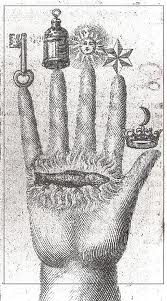
While the book was long awaited for its release in 2009, the paper back edition now opens the subject matter up to a wider audience to question the symbolic significance within it. More than a book that injects Noetics into the mainstream, Brown touches on a few topics of interest to those in the mystery school field, including the Kybalion, Francis Bacon’s New Atlantis, the Sanctum Sanctorum, and the Hand of Mysteries, just to name a few. Plus, if the esoteric aspects of the mystery schools were not enough of a plot device, Brown employs some of the more sacred Masonic sites to add in as a kicker.
The book, while unlike the Da Vinci Code, reads more as a swan song to the 300 year old fraternity than it does a mystery thriller. Unlike the Code where the Catholic Church’s Opus Dei was the villain at large, in The Lost Symbol its less institutional villain and more mental insanity as the protagonist which leaves less of that secret society conspiratorial taste and more of a complicated question of who to cheer for since its all around bad news for all involved, the fraternity that is compromised by a mad man, the Oedipus complex of secrets (not mother), or the video extortion plot. Its complex to say the least and a riveting story line right up to the very end.
If your still on the fence, give a read to some of the reviews posted here from its release last year:
Or, if the original hefty $29.95 price of the hard bound was a deterrent, you can give the paperback edition of The Lost Symbol on Amazon a read for the low low price of $9.99 and catch up on what the post Da Vinci Code – Freemasonry – Dan Brown buzz was all about.
Chris Hodapp over on Freemasons for Dummies does a terrific job of capturing the exchange of Glenn Beck and David Barton, from the Wallbuildersministry organization, on the Fox News Channel in an exchange over the Founding Fathers and Freemasonry.
As Br. Chris captures the exchange perfectly, there seemed to be more misinformation given than factual info. See for yourself in this clip from the program.
I won’t get into the facts of the program, but as discussed by Barton such as Washington’s sincerity in Masonry, his lodge activity, or the difference between American and European Masonry at the time. One document I will point you towards is The Origin of Freemasonry written by a contemporary of Washington, one amongst the pantheon of founding fathers, Thomas Paine. I’m sure Barton may glean much from this short work.
As for Beck, if you haven’t’ paid close attention to his program lately, he has laid a foundation of the Founding Fathers atop the gestalt of Faith, Hope, and Charity even promoting it so far as to create his own university of the triumvirate as the great virtues. Samuel Adams as Faith, George Washington as Hope, and Franklin as Charity which unmistakably two of the three were prominent Freemasons, one of whom was a Grand Master of Freemasons in Pennsylvania in 1734.
But, to Beck, the principals of Faith, hope, and Charity (as seen on these products) are the principals that, he says, are Christian principals which Beck has tied to American Principals and supports with the edifice of the founding fathers. He’s developed it to a point that he’s formed his own Beck University to impart them. While the ideas behind these great social virtues are rightly extolled, what Beck missed is that Faith, Hope, and Charity were ideas adopted into Freemasonry as three tenants by which the Mason were to strive for, but not I would argue, in the way Beck suggests.
Faith – a faith in the divine, the Great Architect, the primitive idea of deity that all men can agree, founded on the Golden Rule, the principal of Do unto others as you would have done to you.
Hope – As an idea that stretches into antiquity as an evil released from Pandora’s Box which entered the world to torment man.
Charity – Is a simple idea that translates to the agape styled love, a fraternal brotherly love towards mankind, which facilitates the other two.
These are three subjects I cover in much greater detail in the book Masonic Traveler.
So, if Beck and Barton won’t brush up on their Masonic history maybe you can help let him know and send him an email to me@glennbeck.com with your thoughts about it.