BRYCE ON RELIGION
Does it really work?
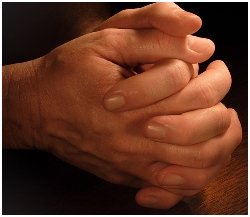 I have had many friends who have asked for prayers for a loved one, usually someone in sickness and distress, such as someone about to undergo surgery, a failing parent, or a young person fighting an addiction. My Christian and Jewish friends are quick to respond to offer their support, but I do not hear too much from agnostics. On more than one occasion I have heard from the people seeking support adamantly claim, “Prayer works!”
I have always marveled at the power of prayer. I see it as a sign of compassion, hope for the person in trouble as well as the family and friends who made the request. This says a lot about our humanity as a people.
I am not sure if praying for divine intervention actually works but it comforts us to put our faith in a Supreme Being when situations run out of our control. Back when I was about to graduate from college in Ohio, my mother and father visited Sydney, Australia on a business trip. Following one of my father’s sales seminars there, the two of them got into the back seat of a taxi to return to their hotel. A storm was howling that evening, so much so, the cab driver had trouble seeing out the windshield. The streets were slippery and the cab, unfortunately, went out of control, aimed at a telephone poll. The driver leaped out of the cab moments before it crashed into the poll. My father jumped in front of my mother to cover her and drove the front seat under the engine. He was taken to a local hospital with all of his ribs broken and abrasions on his face from the broken windshield. A piece of glass settled next to his eye nearly blinding him.
My mother called my brother with the news who, in turn, called me at school. Here I was, thousands of miles from the hospital, and feeling helpless to do anything. All I could do was turn to prayer.
Fortunately, my father survived the crash. The glass was removed from his face and eye, and his ribs were bandaged. He was eventually sent home but experienced extreme discomfort for months afterwards due to his ribs. The scars slowly disappeared over time. The surgeons evidently did a good job as you could hardly tell he was ever in an accident. Interestingly, when he woke up in the hospital, the nurse tending to him wore an interesting name badge, “Bryce,” and sure enough, she was a relative. Frankly, I looked upon her as his guardian angel, the coincidence was simply too remarkable. This led us to discover a branch of our relatives in Australia who we had lost touch with following the first World War. Nonetheless, I would like to believe my prayers had been answered.
One last footnote about my father’s stay in the hospital; ever the consummate salesman, one of the prospective buyers of our product visited him. From his hospital bed and heavily bandaged, my father gave him a sales presentation. He must have been good since the man signed a contract that afternoon. “Who-da-thunk-it.”
Prayer can be comforting to both the person praying, the victim in question, and the family and friends. However, I have learned we cannot rely on it solely, that we must go beyond prayer if possible, and help a fellow human-being. Sometimes a simple visit with the person can work wonders, or perhaps providing a meal, running an errand, taking them to an appointment, mowing the lawn, or whatever. We used to do this naturally, but I am not sure people remember to be kind to each other anymore.
I surely am not suggesting prayer should be confined to times of crisis. It is also a powerful way of expressing thanks, such as for health, well-being, and the bounties we enjoy. It can also be used as an expression of hope, such as for peace, and the safety of people and our country.
Those who do not believe in the power of prayer are typically quick to cite the “separation of church and state” (something which is NOT described in the U.S. Constitution). Personal prayer may be banned from the classroom, but it certainly can be invoked on our own, at any time and any place.
Prayers indeed have power, as many of my friends contend. It may not be foolproof, but I see nothing to suggest it is meaningless or subject to ridicule. Sometimes, it is all we’ve got.
Keep the Faith!
Note: All trademarks both marked and unmarked belong to their respective companies.
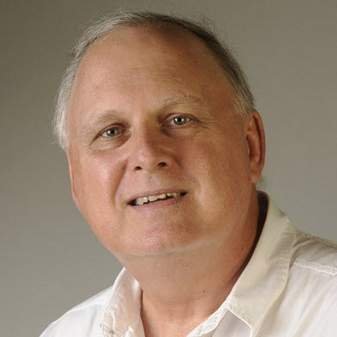 Tim Bryce is a writer and the Managing Director of M&JB Investment Company (M&JB) of Palm Harbor, Florida and has over 30 years of experience in the management consulting field. He can be reached at timb001@phmainstreet.com
For Tim’s columns, see: timbryce.com
Like the article? TELL A FRIEND.
Copyright © 2015 by Tim Bryce. All rights reserved.
Listen to Tim on WJTN-AM (News Talk 1240) “The Town Square” with host John Siggins (Mon, Wed, Fri, 12:30-3:00pm Eastern); WZIG-FM (104.1) in Palm Harbor,FL; and KIT-AM 1280 in Yakima, Washington “The Morning News” with hosts Dave Ettl & Lance Tormey (weekdays. 6:00-9:00am Pacific). Or tune-in to Tim’s channel on YouTube.