Freemasonry, like religion, is an institution that has created for itself its own teleological system of boundaries. What is, and what isn’t, a Freemason is often a hard etched line drawn in the metaphysical sands of the philosophy. And yet, those lines shift between organizations, time or ideology. To overcome this, most branches of Freemasonry have chosen to define Freemasonry in a particular way, like a very specific rendering of a point within the circle – everything within the circle IS and everything without IS NOT. But, at the edge of that boundary, often times are other groups who have made that self same requisite of what is and what is not. Some of those boundaries blend together and others are hard buttressed edges replete with warning totems, curses, and threats of community rejection should they be crossed. The latter example is the edged between mainstream Grand Lodge Freemasonry and Confederation of Freemasonry known as Le Droit Humain. In this installment of Sojourners, I get to cross that boundary and spend some time talking with Dianne Coombs, a lady Freemason from Le Droit Humain. While far from being an outlier within her branch of Masonry, Dianne and I met on that boundary edge and to talk about the fraternity on the other side. Not surprisingly, I found there to be more in common than I thought marked by some stark differences in contrast. The thought to keep in the back of your head while reading this is to ask yourself “how different are we really?”
Greg Stewart (GS) – Dianne, thank you for taking the time to speak with me. Before we delve to deeply in the conversation, tell me about who Dianne Coombs is? How long have you been a Freemason?
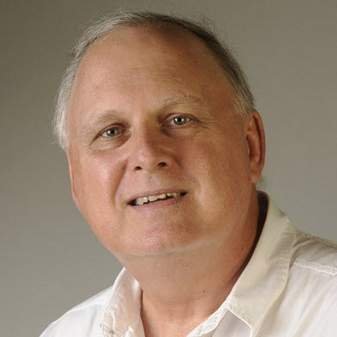
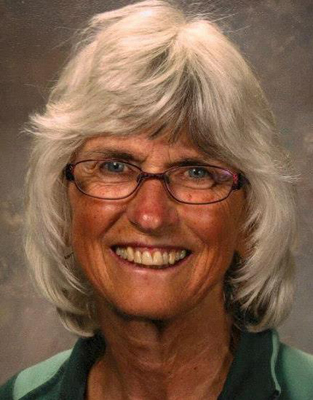
Lady Freemason Dianne Coombs of Le Droit Humain
Dianne Coombs (DC) – I have been a teacher of various subjects for 35 years. I am also a practitioner of yoga, and a student of various subjects such as astrology. I have been a Freemason for 32 years.
GS – What initially interested you in becoming a Freemason?
DC – The organization with which I practiced yoga has schools of initiatic and esoteric studies. It was founded by Masters who were among other things, Freemasons. I wanted to continue being in school, so to speak, and being in a hierarchical organization with specific stages of advancement.
GS – I’m curious, you mention schools of initiation and esoteric studies, and could you elaborate on those traditions?
DC – That group is a worldwide group with headquarters in Mexico City, named the Universal Great Brotherhood.
On the internal side, there are degrees of recognition, and the requirements include a vegetarian diet and abstinence from drugs and alcohol. Those who have been recognized with the first degree and above have the opportunity to join a Secret Chamber.
GS – For the record, you are a member of le Droit Humain (LDH), a mixed-gender masonic organization. How did you initially find them and what lead you to join?
DC – I found out about Le Droit Humain through a friend who had been recently initiated. I joined because I was intrigued by an organization that uses ritual and ceremony, something I am very drawn to.
GS – Were your initial ideas about it validated, or did you discover something different?
DC – Yes and more! More than being just a formal ritual I learned how people, working together to perform ritual well, could create a powerful impact and strong personal bonds.
GS – How so?
DC – At my initiation the ceremony seemed very familiar, possibly through connections to my religious upbringing and later spiritual practices.
GS – If I might ask, what was your religious upbringing that you found familiarity to?
DC – I was raised in the Episcopal Church, but the familiarity didn’t directly relate to the liturgy of the Church. I think I am a person who feels a connection with spiritual ritual, so perhaps that was the connection.
GS – So what influenced you most about Masonry early on? Where did you find your inspiration?
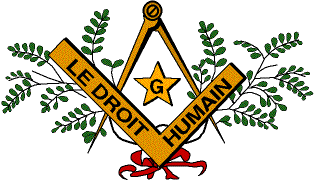
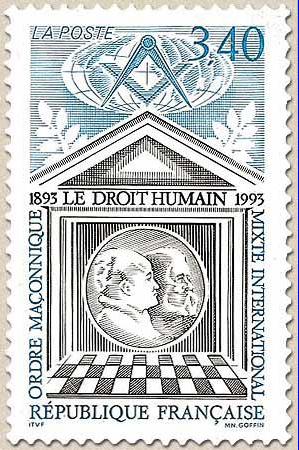
French stamp issued in 1993 to commemorate the 100 year anniversary of Le droit humain
DC – I was initiated into a Lodge that had members who came from a variety of spiritual traditions that all worked together in harmony. I was inspired by the leaders of the American Federation at the time, but no one person in particular was influential.
What was more influential is the fact that Le Droit Humain is an international Order [which] meant that I could attend Lodges all over the world and have Brothers and Sisters all over the world.
GS – Do you, or have you, held any masonic office or leadership roles within Le Droit Humain?
DC – I am installed Master, and currently I a District Deputy for the Mountain States region for the American Federation of Le Droit Humain. I have also served as the head of bodies for higher degrees (beyond the Craft Lodge), and I am a member of the Federation Consistory.
GS – Interesting. Not knowing much about LDH, how many higher degree bodies are there in the Le Droit Humain configuration? Does it mirror American mainstream masonry in the U.S.? Would they be easily recognizable to mainstream masons?
DC – After the Craft Degrees, we have Lodges of Perfection, which mainly work the 4º , 12º and 14º, lodges Rose Croix, which work the 17º and 18º, Areopagi (Areopagus singular), which work the 29º and 30º, Sovereign Tribunal of the 31º, Consistory (Princes of the Royal Secret) – 32º and Grand Inspectors General – 33º.
These are based on traditional Scottish Rite degrees, so I think they would be recognizable to mainstream Masons. Those members who have joined Le Droit Humain after having been members of AASR have not mentioned significant differences.
We also have three York Rite degrees that are considered side degrees because they are optional and do not lead to advancement for higher degrees. They are Mark, Holy Royal Arch, and Royal Ark Mariner.
In LDH, higher degrees are not conferred by decree, but given ceremonially in which the candidate participates.
GS – What do you mean by that?
DC – In [mainstream] AASR, multiple degrees can be conferred simply by attending and watching. In LDH, there is a set time period between the higher degrees to receive them , and the candidate must participate in the ceremony, rather than by observing.
GS – I’m always fascinated with the operations of Masonry, the things we do for it, tell me about your work with le Droit Humain.
DC – I have held various offices within Craft Lodges, and I have helped to create Facebook pages to increase awareness about our Order. Additionally I have served as a contact for those who are inquiring about the American Federation.
That’s on the external level.
On the internal level, I have found that being a member has helped me to work to a higher stage of spiritual understanding and to feel a greater connection to humanity as a whole.
GS – Spiritual level, elaborate on that. What have you come to find that to mean in a Masonic context?
DC – In Masonry, I have found a great deal of diversity in background and beliefs compared to other groups in which I have been a member. The fact that we are working together for a common purpose, the brotherhood of humanity, I think transcends the work being done in the individual Lodge. Le Droit Humain has national and international conventions which serve to create connections with people from all over the world. As far as spiritual understanding goes, the individual must transform himself/herself in order to assist humankind. That is one of the great teachings of Freemasonry in all of the degrees. At the same time, there is the reminder that, “it’s not just about me.” None of the ceremonies or rituals can be performed by an individual, but must be performed by the entire lodge working together.
GS – You make an interesting point that I can’t say occurs in a broad way with the Grand Lodge System. So, why do you think co-masonry exists organizationally? Does it fill a particular niche or need?
DC – There are various co-Masonic organizations in the world. In English-speaking countries we are known as The International Order of Freemasonry for Men and Women, Le Droit Humain. We dropped the term “Co-Masonry” because it had a connotation of somehow being lesser than other Masonry. In Europe it is known as “Mixed Masonry,” but that doesn’t really translate into something that makes sense in English.
Le Droit Humain was founded by a man and a woman who were active in the campaign for the rights of women. Thus, it exists because its members believe in equality. Our international constitution says that we accept men and women as co-equals. In addition, generally speaking, its members believe that Freemasonry need not be reserved exclusively for men because the human soul has no gender.
GS – From what you’ve learned or what you know, how did this mixed masonry begin? What were its origins?
DC – This is copied from the international website:
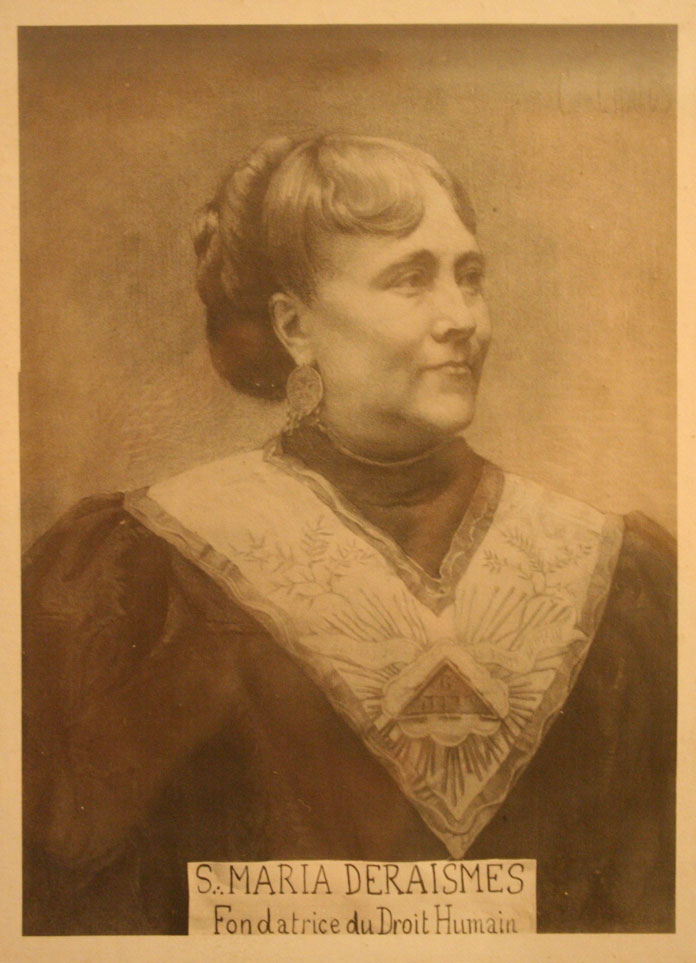
Maria Deraismes
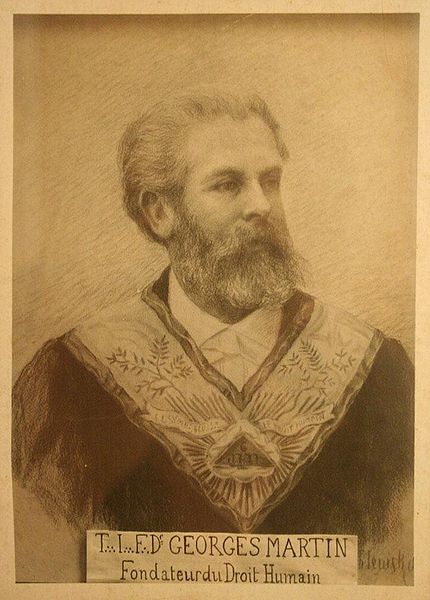
Maria Deraismes, journalist and fighter for the rights of women and children and Dr. Georges Martin, Senator, General Councilor for the Dept. Of the Seine, Municipal Councilor of Paris, undertook campaigns in favor of the civic and political rights of women, the defense of the rights of oppressed children, against clerical intolerance and for the establishment of a neutral school respecting the ideas of everyone.
Maria Deraismes was initiated – on 14th January 1882 – into Lodge “Les Libres Penseurs” of Pecq, a small village to the west of Paris. She was the first female Freemason, symbolising initiatory equality.
Georges Martin
Eleven years later, on 4th April 1893, Maria Deraismes and Georges Martin, a well known mason, created in Paris the first co-masonic Lodge. Out of this co-masonic Lodge came the birth of the Grande Loge Symbolique Ecossaise “Le Droit Humain”, establishing the equality of men and women, out of which, later, came the birth of the International Order of Co-Freemasonry “LE DROIT HUMAIN”.
Maria Deraismes died on 6th February 1894, and the task of organizing and developing “LE DROIT HUMAIN” fell on Dr. Martin. His energetic will placed him beyond frontiers, ethnic groups, religions and cultures, and he very quickly founded Lodges outside France: in Switzerland and in England.
The ORDER spread throughout Europe before sowing itself in other parts of the world.
Le “DROIT HUMAIN” was built out of a marvelous dream, to unite humanity despite all the barriers, ethnic groups, geopolitics, religions and cultures.
GS – Do you see that mandate of creation still in operation today?
DC – When Le Droit Humain was first founded, a principal reason was to recognize the equality of women, not to create an Order outside the borders of France. After the death of Marie Deraismes, Georges Martin saw that this need transcended national borders. It was his vision to create a more universal Freemasonry.
Considering that humanity remains divided on so many levels, I see that that mandate is definitely still in operation.
GS – What do you see as the role of mixed gender masonry in a landscape dominated by the masculine variety of the fraternity?
DC – Its role is the same as that of many Masonic orders: the progress of humanity. The principal difference is the work on an international level without distinction of gender.
GS – Is there room for both?
DC – There is definitely room for both, just as there is room for women-only or male-only orders. The male members of Le Droit Humain disagree with the idea of discriminating against half of humanity, which is often part of their reason for joining.
GS – Do you see a fixed and unchanging boundary in separate, but essentially equal, branches of Masonry (i.e. regular, Co-Masonry, Prince-Hall, Feminine, etc…)?
DC – I do not see it as fixed. I have come into contact with members [of] traditional male craft lodges who are genuinely interested in learning more about mixed orders. I see very tiny baby steps happening right now towards mutual recognition.
GS – That sounds promising, anything you can elaborate on about this mutual recognition?
DC – While I have come into contact with some traditional Masons who continue to insist that women cannot be Freemasons, in forums such as social media, I have had respectful exchanges of ideas from masculine Brethren. Neither side is insisting that the one join the other, but the fact that the dialogue is respectful, indicates to me that the door is opening slightly. The Lodge of which I am a member has received referrals from masculine lodges for women who would like to become Masons. While that is not indicative of mutual recognition at this point, the fact that there is even a conversation is a step in the right direction.
GS – Are there any overtly different aspects between co-masonry and the grand lodge tradition?
DC – Not really – the main rituals used in the United States are based on traditional AASR rituals. The rituals used in Europe in both Le Droit Humain and traditional orders are essentially the same.
GS – Should there be some recognition between the branches, or even equality of association as in say, some kind of open organizational association?
DC – Yes. We should have this recognition because, in our mutual pursuits for the progress of humanity, we have a lot to gain in solidarity of efforts and to learn from each other’s approach.
GS – Why do you think there continues to be a distinction between the two?
DC – I think many people in the masculine Orders have a great respect for tradition. [But] sometimes respect for tradition does not allow for change. There can be a delicate balance between the respect for tradition and evolution.
One of my favorite texts, The Kybalion: Hermetic Philosophy, teaches that there is always change. If this change is for the greater good of humanity, change does not need to be avoided.
GS – It sounds like there is some degree of openness from the LDH side, how do you react when words like ‘clandestine’ or ‘bogus’ are thrown around when used in describing a flavor of Masonry other than those calling themselves ‘regular’?
DC – I kind of shrug my shoulders. It’s not worth getting upset over, since it’s usually the result of a lack of understanding. By the same token, some male craft lodges have become purely social organizations (men’s clubs) and have drifted away from the deeper traditions of Freemasonry. Often those in traditional lodges seem to have a kind of fear of other orders, or they demonstrate the need to be exclusive (perhaps on a psychological level) – not only towards women, but also towards those or different race or ethnicity.
GS – Within LDH, what do you see as the role of the esoteric aspects of Masonic study?
DC – Although not explicit, the esoteric aspects of Masonic study are an integral part of the Work. The esoteric traditions of initiation in general often draw many people to become members.
GS – Is there an explicitly esoteric aspect to it?
DC – Yes – we interpret the symbolism of the rituals and furnishings to have a deep meaning, which, of course, is not interpreted for anyone, but left for members to discover for themselves. Many members consider Freemasonry to have ancient roots, back to the earliest times of recorded history, and that Freemasonry is the repository for the ancient Mystery Schools. Even though the symbolism is not interpreted for anyone, it is understood that many ancient traditions have a connection.
GS – Which traditions do you think it draw the greatest parallels or symbols from?
DC – I think the great Mystery traditions have informed Freemasonry in general and Le Droit Humain in particular – ancient Egypt, the Hebraic tradition, the Eleusinian mysteries, the Knights Templar, and more.
I think Le Droit Humain would make the same connections with past traditions that mainstream Masonry has made.
GS – As a body, who does Le Droit Humain look to as its organizational patriarchs, matriarchs or its great authors?
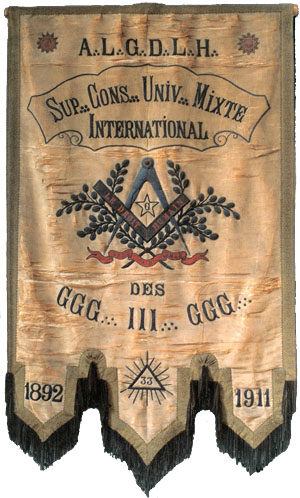
DC – Our organization is not based on the Grand Lodge system; we have a Supreme Council headquartered in Paris. Those countries with a sufficient number of lodges are termed federations.
Our International Constitution says that,
The Order is organized into federations, jurisdictions and pioneer lodges within which Freemasons … meet in lodges of all degrees that have been granted a charter by the Supreme Council of the Order.
Due to the way Le Droit Humain is organized, we do not have patriarchs or matriarchs. We have had many Grand Masters who have left profound writings, as well as have past heads of the American Federation, but none is more influential than another.
Inspirationally, members often draw upon the same Masonic authors as members of other orders.
GS – So, let’s take a turn here and talk about something on the minds of both sides of the divide. As a membership society in a landscape of similar such bodies and organization how do you believe LDH is faring in the modern landscape?
DC – Over the last five years, the American Federation has increased its membership by nearly 50%.
GS – Where has that growth come from do you think? Is there an organizational push for growth or is it organic?
DC – I think there are a lot of factors – the thirst from humanity in general, increasing our visibility without proselytizing, and as is the case with other Orders, personal relationships.
GS – So where do you see le Droit Humain 5 years from now? How about 10 years from now?
DC – I expect to see more Lodges being formed in new areas and increased numbers in those that have already been established.
GS – If someone was interested in finding out more about le Droit or interested in associating with them in some capacity, what would you recommend to them? How could they go about it?
DC – Besides recommending the web pages, I would recommend completing the contact form on www.comasonic.org, because a person who is interested in learning more will be contacted personally. Requesting information on Facebook pages generally draws a personal response as well.
Dianne, thank you so much for taking the time to talk with me and share your thoughts. I definitely appreciate it and I know many reading, while perhaps not publicly, appreciate it too.
For More information on Le Droit Humain in the United States, visit comasonic.org. Their international website is at droit-humain.org.
Is it a club, a corporation, a religious cult, a PAC, a philanthropy, or a fraternity? BRYCE ON THE MASONS
In the many years I have been a member, I have always found it fascinating how people perceive the institution of Freemasonry. Some say it is a club, others see it as a philanthropy, but very few seem to understand the concept of fraternity. Further, when we investigate candidates for membership, we normally ask what they are looking for, but rarely do people comprehend precisely what they are joining. This is a compelling argument, one I’ve debated on more than one occasion.
Some of our members see Freemasonry as nothing more than a club, such as a garden club, sports club, country club, etc., an institution we join with some common activity or goal. Clubs are typically run by a set of officers who participate in order to receive some notoriety for their position. This, of course, leads to politics involving backscratching, deceit, backstabbing, and one-up-man-ship. It is not uncommon to find people in such positions who have done nothing of substance in their professional lives and now relish the opportunity to control others. In Freemasonry, we are taught members are all equal in terms of position and opinion. The officers in a Lodge represent a network of duties and responsibilities designed to be implemented by many people, not just one, thereby encouraging teamwork, and eliminating the need for autocratic rule.
There are those who see Freemasonry as a corporation. The problem here is that a corporation is designed to be profitable in nature, Freemasonry is not. True, there are advantages to running any institution like a business, particularly by the state who requires all organizations to run as such, but Freemasonry certainly has no mercenary objectives other than the betterment of its members.
Despite the warnings of conspiracy theorists, Freemasonry does not preach dogma, nor practice religion. A person must believe in a Supreme Being to become a Mason, but his choice of religion is his business, not the Masons. As such, it is not uncommon to sit in a Masonic Lodge with men of many different faiths, thereby promoting religious tolerance.
Freemasonry is not a Political Action Committee (PAC). In order to maintain harmony in the Lodge, politics and religion are two topics forbidden from discussion. Like religion, men of different political beliefs sit in Lodge together in harmony. If anything, Freemasonry promotes the concept of citizenship to the community and patriotism to the country. Those who violate the law and believe in the overthrow of the government by force are not permitted to become Masons. Masons are law-abiding citizens who are taught to use peaceful means to change the government if necessary. As such, Masons hope to become role models for the community.
Perhaps the biggest misconception is that Freemasonry is a philanthropy. It is true Masons give generously to help others in distress, but this is a peripheral goal. It is not intended to spend countless hours on fund raisers or to shake down the Brethren for every available penny. Masons help others if it is within their capacity to do so. Otherwise there is no mandate in Freemasonry to perform philanthropic work. If Masons spend more time on philanthropy than fraternity, then they are subverting the intent of the institution.
Instead, Freemasonry is a fraternity; the original fraternity, and the model for others who came much later, such as college fraternities. The term “fraternity” comes from the Latin word “frater,” meaning “brother.” Fraternity, therefore, is a brotherhood, an environment of companionship dedicated to the social development of its members. The basic tenets of Freemasonry are “Friendship, Morality, and Brotherly Love.” As such, it is designed to build character, devotion, and encourage its members to lead an honorable life. Attending a Masonic Lodge meeting is intended to act as a fortress of solitude for its members, both local and visiting Masons, where they can meet and find solace away from the vermin and troubles of the world. It is a place where men seek understanding, compassion, and to be treated fairly and honestly.
Education is of significant importance in a Masonic Lodge, where Brothers ponder past, present and future problems of morality, responsibility, compassion, and civility. We refer to this as seeking “further light.”
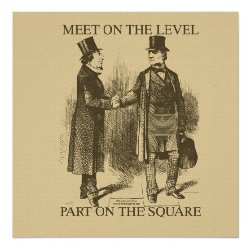
Freemasonry, therefore, is not a club, a philanthropy, a religion, or a PAC. Using symbols from ancient operative Masonry, Freemasonry is a place where men meet “on the level” (to promote equality), act “by the plumb” (rectitude of conduct), and part upon “the square” (to practice morality). For many centuries, Freemasonry is the fraternity where men of character have naturally gravitated to, simply because they yearn for such simple treatment.
Those who think of or practice Freemasonry any other way are missing the boat.
Keep the Faith!
Note: All trademarks both marked and unmarked belong to their respective companies.
Tim Bryce is a writer and the Managing Director of M&JB Investment Company (M&JB) of Palm Harbor, Florida and has over 30 years of experience in the management consulting field. He can be reached at timb001@phmainstreet.com
In or around the Babylon, New York, area in March? Br. John Nagy will be presenting a workshop on the symbols, meaning and landscape of Masonic ritual.
The Building Better Builders Workshop with Br. John Nagy Presented by the Masters, Wardens and Deacons Assoc. & the L.I. Past Masters Association.
Ritual is Masonry’s Veiled Road Maps. You must learn how to lift its Veils and read its Maps to Travel its Undiscovered Country.
This Workshop steps Masons through Ritual and Reveals to them Masonry’s rarely seen Terrain. Through instruction and examples, this Workshop helps develop Map Reading skills that further your Masonic Mastery.
Imagine Masonic Education that actually ‘Builds Better Builders!
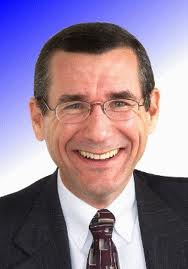
Imagine receiving that Education for yourself! Br. John S. Nagy
Masons need Transformative Masonic Education! To address this need, Brother John S. Nagy created a series of books, articles and videos showing the Work that brings forth Masonic Mastery. His combined Works now assist Masons toward better Recognizing, Understanding and Executing the Masonic Work to which Freemasonry alludes. Like his other Works, this Workshop brings to Masons a much clearer and cleaner understanding of what is required to Build Better Builders.
Nagy, you may remember was a guest on Masonic Central in 2009.
This workshop will cover:
The Actual EA, FC & MM Work
The Basis Behind The Work
The Transformation and Results That Masons Who Do the Work, Can Expect
Where: Babylon Masonic Temple
250 West Main St.
Babylon, NY 11702
When: March 8th 2014
Tickets: $20 – available online here.
Includes breakfast and lunch.
SATURDAY March 8th ACTIVITY AGENDA
Time Activity
8:00 – 9:00 – Registration/Coffee/Tea/Juice/etc. in Lodge Dining Hall
9:00 – 9:30 – Introductions and Overview – Lodge Room
9:30 -11:00 – The Entered Apprentice Work, Background & Results
11:10 -12:00 – The Fellow Craft Work, Background & Results
12:00 -12:50 – Break for Lunch in Lodge Dining Hall
1:00 – 2:00 – FC (cont.) / The Master Mason Work, Background & Results
2:10 – 3:00 – MM (cont.) / Three Degree Continuity & Interconnections
3:00 – 4:00 – Q&A and Wrap-up
About the Presenter:
Br. John S. Nagy is a Master Mason and member of Tampa Bay Lodge No. 252 in Tampa Bay Florida and the Florida Lodge of Research No. 999. Brother Nagy is Lodge Musician and a Masonic Education Provider for both his Lodges. He is also author of the Building Series of books “Uncommon Masonic Education”.
Coach Nagy is a contributing author to Further Light Magazine, Living Stones Magazine and The Working Tools Magazines. He is a Business Coach, Technical Advisor, a Florida Certified County Court Mediator and an Approved Assistant Mediator Trainer.
If you are reading this you are going to think that this is a little far removed from Freemasonry. You may even think that it violates the principle of discussing religion inside Freemasonry. But you would be wrong.
The prohibition in most jurisdictions is against allowing sectarian religion and partisan politics into the Lodge room.
So if I am proselytizing for a religion or denomination within a religion and/or a political party then I am in violation. But if I want to talk about honesty in government or the power of prayer, well I think that is a different story.
Early American Freemasonry was the nation’s biggest booster of the public school system. Are you prepared to tell me that advocating government schools is a violation of the Masonic prohibition about political discussion?
I think that this point is so very, very important because I think that Freemasonry has missed two giant opportunities to teach and help the world, especially America. First Freemasonry could have been the leader in promoting race relations. In 1898 MW William Upton, Grand Master of Mainstream Masonry in the state of Washington recognized Prince Hall. What if that recognition had spread then and there throughout Freemasonry? What if the Craft was able to influence secular government to harmonize the races? Would Martin Luther King’s protest movement have been necessary?
Instead Freemasonry ran from its responsibility for a variety of reasons among them being its timidness towards mixing the secular world and its doings with the fraternity of Freemasonry and its world. So in reality what it ended up doing as a compromise was similar to what the states did before the Civil War – free states and slave states.
Secondly Freemasonry missed its opportunity at promoting World Peace. Our beloved fraternity is one that considers all its members on the level, that is equal regardless of race, religion, political persuasion, creed, culture or economic circumstances. Now what is wrong with promoting that to humankind?
Ultimately Freemasonry must decide whether it is a cloistered society or a community involved society, whether it is a secret or private society or one that is willing to share its philosophy with the public.
While you are thinking about that enjoy the video about science and spirituality. Just don’t tell me it’s a prohibitive sectarian religious discussion.
In this installment of the Sojourners column we meet and talk to a ‘young’, but accomplished, artist and Freemason – Ryan Flynn. With his art, Flynn brings to the fraternity an unmatched graphic skill to match the patient and certificate makers of old in their typographic excellence and aesthetic composition. Equal parts artist, graphic designer and a true Freemason, Flynn captures the essence of what it means to BE a mason – translating those esoteric ideas into traditional drawings and paintings. No, this is not the print, cut, carve, hack, hew, etch, letter or engraving of the secrets of Freemasonry, rather, Flynn’s work takes a post-modern approach into the little trod corner of the Masonic landscape by capturing it’s ideas in the rendered image. I think you’ll enjoy this Sojourner’s visit as much as I did and will come away from it with a new take on art and Freemasonry and the synthesis between them.
Greg Stewart (GS) – Ryan, thanks for taking the time out of your schedule and sitting down to talk to me. I suppose, let’s start with the basics on how long you’ve been a part of the fraternity?
Ryan Flynn (RF) – I was raised on June 22, 2010 in Ancient York Lodge no. 89 in Nashua, New Hampshire.
GS – What was your first introduction to the fraternity?
RF – I had a couple of friends from other states join in 2008 and 2009 and it peaked my interest.
After doing some research on the craft, I called my local lodge and visited for dinner. The next week I put in my application.
GS – Do you remember what ultimately induced you to join?
RF – I am a history buff, more particularly an art history buff, and the idea of symbols in art and architecture was always something I enjoyed learning about.
I also was never part of the armed forces or anything else that served “something bigger than myself,” so when something like Masonry presented itself to me, I was intrigued and wanted to learn more.
GS – Since you’ve joined, have you found your way into any of the other bodies or related groups?
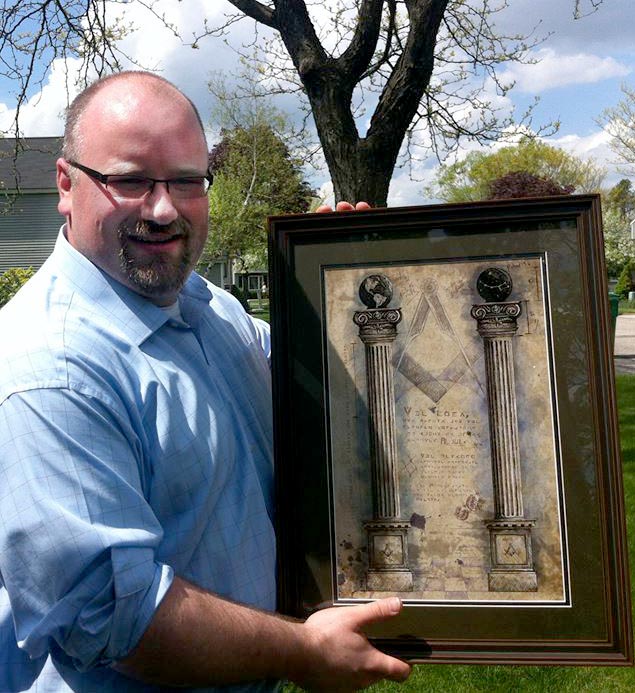
Ryan Flynn with one of his Codex images
RF – As of right now, I am the Junior Warden of Ancient York Lodge no.89 in Nashua, NH. I am a 32º Scottish Rite mason and member of the Philalethes Society and this upcoming year I plan on joining the York Rite.
GS – One of the things that intrigue me most is the artwork you create, in particular the Masonic art, much of it you have up on your website. With that in mind, I’m curious what your biggest influences to making it are?
RF – I have always been artistic. While attending high school, Lexington Christian Academy, my teachers realized this and always pushed me to be more artistic, even those teachers that taught classes that didn’t directly involve the fine arts. I particularly remember the motivation I received in World Literature class after reading Dante’s Divine Comedy with its amazing abstract symbolism. The work taught me to take symbolism in my art to another level.
As for history, my teachers were so impassioned with the subject that I couldn’t help but get motivated. I especially was intrigued with the history of art and the renaissance.
I was very fortunate with my high school. I had hands on training in painting, drawing, graphic design, stained-glass mosaic work, set design and sculpture. And my professor always pushed me harder than the others.
GS – Did you ever have any formal training? How did it influence you in your work now?
RF – After high school, I attended the University of Massachusetts and studied graphic design, painting, drawing and art history. Yet again, I was fortunate to have a professor that motivated me to learn more, and I started diving into learning about symbolism, sacred numerology and mythology.
In 2006, I studied painting and art history in Florence, Italy. I had the privilege of studying the great renaissance masters in person, and I particularly loved learning about the history of art, especially the beginnings of the renaissance. My time in Italy highly motivated me to create, and to create with purpose. I truly believe that I left for Italy as a student, and returned as an artist.
GS – How so? What changed?
RF – While attending college in Massachusetts, I was taught color theory, methods of lighting, brush work and drawing techniques, but MEANING was never discussed. Studying in Italy, I would have these moments of complete harmony with the art, moments to contemplate on what you are looking at, it changes you, and motivates you.
When I came back from Italy, I wanted to paint ideas, not images, and with being initiated into the craft, I had direction.
In Italy, I began to truly understand that works of art were really the culmination of research, practice and years of work. Michelangelo’s “David” transformed from a large nude man, to a blatant political statement, warning the enemies of Florence to fear the repercussions of challenging them. The Sistine Chapel became a lesson book for deep religious and philosophical thought, and at the same time a motivation to stand up to oppression and to use your mind and talents to bring light to others.
It was simply motivating. I recently returned to Florence, and found myself again, sketching, and really looking at the art and architecture again, this time with Masonic eyes. When I returned home, I immediately started working again. To put it plainly, Florence is with out question my muse.
GS – So, from your background, where do you see art mingling with Masonry? Do you think the two have always been in close proximity to one another?
RF – Masonry is based on art, and highly symbolic art at that. Our ancient brethren were artists, and anyone who has put a chisel to a piece of Marble understands how gifted and dedicated they were. And, just as I try to do with my work, they used their talents to share concepts that simply cannot be done by speaking. Hence why we as Free and Accepted Masons use symbols as the base of our degrees and lessons. I firmly believe that a successful work of art can sum up more feeling and emotion than a 30 minute lecture.
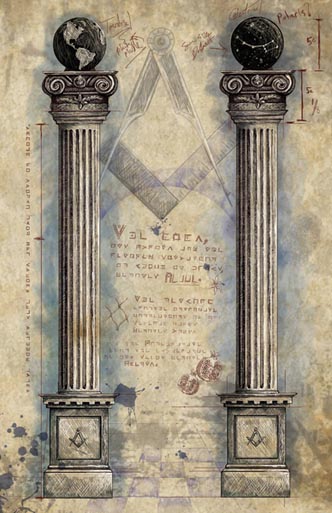
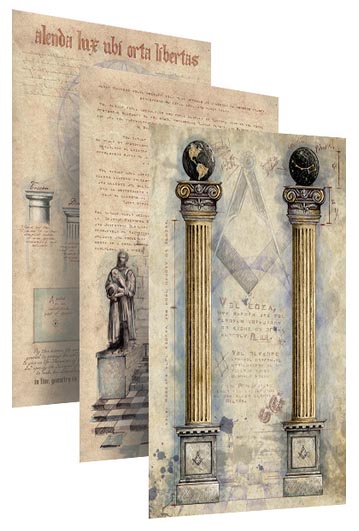
CODEX I: THE PILLARS Ryan Flynn
And there are great examples of artists predating what we would now call Freemasonry hiding symbols of what became the basis of our craft into their works. Artists like Albrecht Dürer, Michelangelo and William Blake made it a point to reference Pythagoras, Kabbalah and sacred geometry in their works because they knew it was important knowledge to pass down.
Masonic artists should be no different.
GS – For those who might be unfamiliar with your artwork, how would you describe it to them stylistically?
RF – I’ve dabbled in a lot of styles, but I have been working as of late in a style that mimics the medieval Italian style.
I have a mechanical method of creating; I always need to know how something works before I paint it. So when I learn something, I become motivated to create something referencing it. If anyone ever sees me in lodge, I’m always carrying a sketchbook and notebook. When listening to the ritual, sometimes I get an idea and need to jot it down.
Once I had a good amount of ideas in there I realized I had my own Codex, which inspired me to create my first Masonic series, the Middle Chamber Codex series, in which I re-organized some of my notes to mimic the codices of DaVinci. This in turn led me to try making illuminated documents.
My future works will continue in this style until I am led into something else, it’s one of the things I love about being an artist, I set my own path.
GS – Of the work up on your site, which is your favorites?
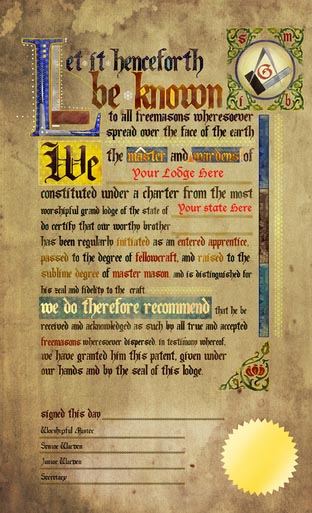
Master Mason Patents Ryan Flynn
RF – Without question my authentic Master Mason Patents.
I love the fact that is the real deal, real gold, real calf skin parchment and all by drawn by hand. I take a lot of pride in them. I also like that it’s the only work that the client does not see until it’s finished. I never do one the same as the others; everyone gets their own unique patent.
As any artist will tell you, to know that something you create will be around a lot longer then you will be is a comforting thought. And because they are authentic, these patents potentially can last for hundreds of years.
A little scene that keeps popping in my head is of my daughter’s great-grandson finding my patent a hundred years from now and seeing how much Masonry meant to me.
GS – This may be out there a bit, but do you see juxtaposition between Masonic art and, say, more obscure, esoteric, or symbolic art?
RF – Absolutely, Masonry is about gaining light. And all forms of art can produce amazing “Eureka” moments in the viewers mind. I find that looking at abstract art can be a wonderful method of meditation and reflection.
GS – Your work, how do you create it? Is it hand made, mixed or digital media?
RF –Each project is a little different, but it all starts with pencil on paper.
Codex Series Prints Ryan Flynn
Pretty much with all my prints I will hand draw elements of the project on paper, then scan them in and position and color digitally. For my Limited Edition prints, I then Gicleé print them and complete them by hand, coloring them with metallic infused inks.
As for the authentic patents, they are 100% hand made. I order only the finest parchment from a small family owned company in upstate New York. And once they arrive I press them for a couple days under some large books to keep it flat. Then I sketch out my design on paper and using a small tracing table that I built, transfer it to the parchment. It’s a time consuming process with no room for error. If I mess up, I start over. After the sketch is completed, I ink it with high quality inks. Finally, when that is done, I Apply 23kt gold leaf and a wax seal that I designed.
As for my watercolors and paintings, they are all 100% from the brush. I sketch out my projects with light graphite and start applying the paint from light to dark.
GS – Have you had much response to your work from the Masonic world? What’s been the response?
RF – When I originally produced the window designs for my lodge, the images went viral, I think they were shared on Facebook over 1000 times, and they were featured on the covers of some magazines, I was in shock at how many people adored them.
My codex series was a big hit. I unveiled them at the Masonic Restoration Symposium in August and had many brothers not only purchase them, but have long conversations with me about why it was important to masonry for me to continue creating them.
I also have received some welcomed support by some fellow brothers. My good friend, Wor. Paul C. Smith, has helped me by pointing me towards information, by offering me council as well as recommending books and reading. His help has been immeasurable.
GS – Your patients look like illuminated manuscripts from the middle ages. How did you master that technique? Is there a subtext to styling them the way you styled them?
RF – Easy, I haven’t mastered it.
When I finished my first one, I looked back and said to myself “this is amazing.” Then I did my second one and it blew the first one away. As for training, having extensive knowledge in drawing, painting and design can lead you to learn anything you want.
Some things didn’t work out so well. I tried to create my own inks and failed miserably at it. I’ll try again soon.
As for gold leaf techniques, I learned by making mistakes. I bought some faux gold leaf and applied it to heavy paper and spare scraps of parchment. It took me 3 or 4 tries to get it to work the way I want.
GS – Given your proximity with Masonry and the arts, beyond the work you create are there any artists or artistic influences that come to mind that you think should (or do) have an influence on Masonry?
RF – As for the fine arts, I encourage every lodge to have someone take the time and learn about Filipo Brunelleschi, Michelangelo and William Blake.
Brunelleschi, for those who are not familiar with him, started the renaissance by stepping back, travelling and learning about geometry, science and the knowledge of the past. This to me sounds like the perfect example of what we as masons should strive to accomplish.
Michelangelo should be a patron saint of symbolism. He knew of Kabbalah, sacred geometry and numerology and he put in into all of his masterpieces. The Sistine chapel is a love letter to the Kabbalah, and learning about how he hid those messages into this work will open up your eyes on how to contemplate on a work art.
And Blake – Blake is the prime example of what a Masonic artists should strive to be. His tremendous works engulf the viewers with blatant Masonic symbolism, but upon further inspection, the real messages can be found within. Each of his paintings could be its own lecture in lodge.
GS – So what’s next, any new Masonic works on the horizon?
RF – I carry around with me a notebook of all my potential works. I don’t want to reveal most of them yet because I have not perfected them, and as any artist or writer will tell you, a first or second draft will rarely look like the final project.
However, I can say that I have detailed plans for a tracing board that will be like nothing else in Freemasonry. I’m also working on an illuminated manuscript of the Middle Chamber lecture and a series of prints that mimic the Egyptian style.
Unfortunately all my big projects require funds so it’s a slow and steady process, but God willing I have a lot of time to get working and make and hopefully make a small difference in Masonry.
_
My thanks to Ryan, to whom I appreciate the taking of his time. I very much appreciate his tremendous body of artwork and will definitely keep an eye out for your up coming projects. You can see more of Ryan Flynn’s artwork at his website, and, if you’re in the New Hampshire area, you can see Ryan’s lodge windows in person by visiting Ancient York Lodge.
Masonic tradition has had a rich application of the notion that it is imbued with a Hermetic philosophy with very little explanation of what that means. At no time, in the teachings of the fraternity, is a candidate or member handed a pamphlet, booklet or tract explaining what Hermetic has to do with masonry or how it pertains to the rituals of the degrees. Further, no philosophical or religious tradition is said to be the linchpin of Masonic teachings and the esoteric institution of which they have obligated themselves. The only glimpse of that teaching comes in the ritual use of the Bible as the Volume of the Sacred Law which can vary country to country, tradition to tradition, and initiate to initiate as the volume is suggested to be the book the candidate holds as holy.
The closest that this tradition of Masonry comes to teaching the meaning of the Hermetic art can be found in the teachings of the Scottish Rite, which for many years gave out to its members a large bound tome of Albert Pike’s Morals and Dogma instructing the candidate to read it, as able, so as to better understand the degrees. But, because of its complexity, Morals and Dogma more often served as a door stop than a doorway to greater wisdom.
More recently, Pike’s 900 page manuscript of the occult sciences has been replaced with Rex Hutchens’s A Bridge to Light, which is a good and useful tool for the literal understanding of the degrees, yet still lacking in much greater depth than to suggest you, the reader, to go and research the greater meaning of the obtuse symbolism.
Perhaps this is an intentional lesson in resourcefulness for the true student, but for a greater understanding of the esoteric teachings it served as to great a bridge over the wisdom than as a path for the aspirant through the teachings.
Having followed the many paths of the esoteric science, one idea that repeatedly comes to the fore is that it is of a Hermetic philosophy. Pike uses the term liberally in Morals and Dogma saying in the 28th degree
The Hermetic Art is, therefore, at the same time a religion, a philosophy, and a natural science. As a religion, it is that of the Ancient Magi and the Initiates of all ages; as a philosophy, we may find its principles in the school of Alexandria and the theories of Pythagoras; as a science, we must inquire for its processes of Paracelsus, Nicholas Flamel, and Raymond Lulle.[1]
So what exactly does the Hermetic Art mean to being a Mason?
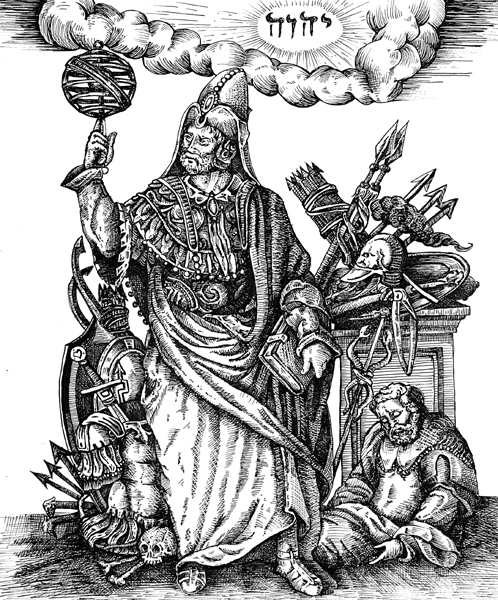
Hermes Trismegistus
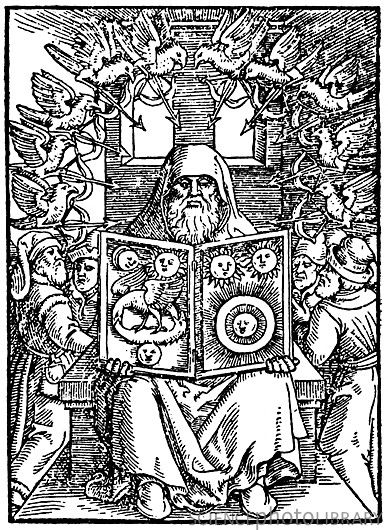
The great teacher of the Hermetic Art is said to be Hermes Trismegistus better known as the Thrice Great Hermes of whom Pike makes a parallel to Grand Master Hiram in his third degree monograph.[2]
Who is Hermes, and why would his teachings be of any importance to a third degree Master Mason?
Through this series on the Hermetic Arts, I will explore those questions and try to create an association between the principal Hermetic text and the Hermetic principals which have wound their way into many esoteric teachings, but in particular those of Freemasonry. To facilitate this understanding, we need to examine the principal Hermetic text from which the teachings of Hermes Trismegistus originate – Hermetica: The Greek Corpus Hermeticum and the Latin Asclepius.
While some may construe its teaching as religious, we need make our focus on it as the source materials from which much of the Western Esoteric Mystery traditions have drawn their teachings. Yet, because of what it teaches, it would be impossible to interpret its writing without acknowledging it as religious text, complete with a creation myth, commandments of adherents, and ceremonies of inclusion for those who choose to devote themselves to its teachings, a practice that would be difficult to separate Freemasonry from in its religious practice of ceremonial ritual. Masonry, like most other mystery schools, has adopted aspects of the work, such as it has from other esoteric workings including tarot, magick, Kabbalah and of and New Thought ideas of life mastery. In this undertaking of exploring Hermetica, our focus need be on its teachings so as to better improve the human condition towards those we come into contact with, which is at the heart of the Hermetic philosophy.
While the text of Hermetica contains what its authors suggest are certain truths, I leave to you their validation and weight, when taken in consideration of your own belief traditions. In some instances, they may give you a path to better understanding your own beliefs or give you another way to look at what was before now an assumption of truth. Over time, it has been said that Hermetica held aspects of religious mythology, early millennial Hellenistic religious ideals, Neo-Platonism, Sufism, Islam, Judaism, and Christianity but it is my belief that as the texts originated in an early period of the Common Era, their ideas stem from an older tradition that dates into late antiquity and perhaps the earliest of monotheistic Egyptian rituals of initiation and veneration. Evidence of origin is difficult at best except when you consider its origins by lineage which, as Free Masons, we can find some heraldry to them as its modern day companions in practice.
At various intervals, Freemasonry itself has been called a hermetic science with seldom a satisfying explanation of what that means. In part, the use of this type of language could be taken in scientific terms to imply a closed loop system of wisdom teachings – a self contained system, without influence or coloration to any other philosophical or religious tradition save what itself promulgates as the allegorical and symbolic lessons it teaches.
Yet, at various points in the Royal Art, of which Masonry has expounded itself as, includes moralistic teachings that, at their core, utilize Christian verse and meaning drawing upon Biblical allegories from the Great Book while introducing ideas from traditions that seem to spring from outside the age within which the Bible was conceived.
A few examples of this include the trans formative process in alchemy and the Jewish Mysticism of found in the Kabbalah which were later elaborated upon by writers of the great tradition of Free Masonry most notably in the works of Pike and Wilmshurst whom both injected their own ideas, by interpretation, into the tradition. So true is it with this undertaking that one must suspend the idea of what it is we believe the Great work of Freemasonry teaches to explore another possibility. From this exploration we can hopefully come to understand the later developments of the ancient idea of philosophical tradition not enclosed within itself – not as a hermetically sealed philosophy but a broader tradition of the philosophy (and perhaps religion) of Hermetica itself. It is through a close reading of the Hermetic texts and an analysis by which we can produce an exegesis through a juxtaposition of the philosophy that comes from Hermetica and the lessons taught in the degrees to find, if it exists, a harmony between the two and reach a firmer understanding of what being a Mason means and how it, perhaps, colors our underlying ideas of morality, truth and faith. Is the link between Hermetica and Freemasonry an accident that occurred in the attempt to mythologize a simple tradition of initiation and mystery play theatrics that has been carried forward religiously for centuries? Upon closer interpretation of Hermetica, this does not seem to be wholly the case.
Sadly, there is no direct evidence of its association or of any such intention other than to compare the rituals of masonry and some of the possible conclusions that may be drawn from them in parallel to the Hermetic writings, in particular in the three craft degrees. But, this is a speculative science, so then we must speculate and attempt to find parallels where we can. In the mean time, while we ponder the deep questions, of origin, source and meaning it is my hope that hope that we will discover a richness of tradition and possibly a new means to understand our own faith in a system of morality taught by symbolism and allegory. That discovery, I believe, comes in understanding the ancient text of Hermetica.
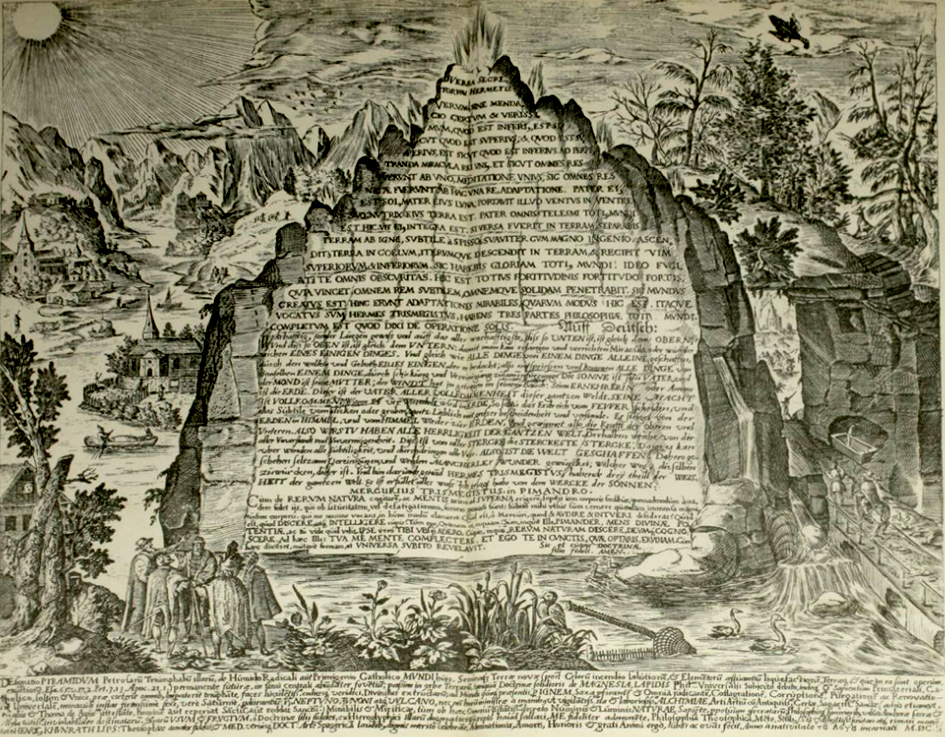
But, before we begin to examine the text of Hermetica, our first stop must need be with the well known Emerald Tablet, a codex of sorts said to codify the teachings of Hermes into a singular distillation of the main points of Hermetica itself.
As we progress ahead, you can be the judge of the Emerald Tablet’s points and their relevancy when compared to their supposed source material.
Tabula Smaragdina – From Heinrich Khunrath’s alchemical text Amphitheatrum Sapientiae Aeternae, 1608/1609
The tablet, as a translated work, can be found in its oldest documented source from the Kitab Sirr al-Asrar, The Book of the Secret of Secrets, which is a 12th century translation of a 10th century Arabic text which included subjects on many areas of interest to the contemporary mystery school student including ethics, astronomy, magic, and alchemy. Elements of the text are believed to have circulated well before their compilation into the Kitab by several hundred years.[3]
This portion of the greater text is a compendium of advice for rulers, believed to be a letter from Aristotle to Alexander the Great. The work has had many translators over the centuries ultimately producing the work we read below.
The Emerald Tablet of Hermes – Contemporary Rendering of Latin text
[It is] true, without a lie, certain and most true,
That which is below is as that which is above, and that which is above is as that which is below, to perform the miracles of the one thing.
And as all things were from the one, by means of the meditation of the one, thus all things were born from the one, by means of adaptation.
Its father is the Sun, its mother is the Moon, the Wind carried it in its belly, its nurse is the earth.
The father of the whole world [or “of all of the initiates”?] is here.
Its power is whole if it has been turned into earth.
You will separate the earth from the fire, the subtle from the dense, sweetly, with great skill.
It ascends from earth into heaven and again it descends to the earth, and receives the power of higher and of lower things.
Thus you will have the Glory of the whole world.
Therefore will all obscurity flee from you.
Of all strength this is true strength, because it will conquer all that is subtle, and penetrate all that is solid.
Thus was the world created.
From this were wonderful adaptations, of which this is the means. Therefore am I named Thrice-Great Hermes, having the three parts of the philosophy of the whole world.
It is finished, what I have said about the working[s] of the Sun.
Image: Thrice Great Hermes Trismegistus, pen and ink rendering, from original source material with adaptation.
[1] Morals and Dogma, Knight of the Sun, or Prince Adept,. p. 774/775
Registration is now open for the Scottish Rite Masonic Museum & Library symposium
Perspectives on American Freemasonry and Fraternalism
April 11, 2014
From the Library:
The Scottish Rite Masonic Museum & Library announces its symposium, Perspectives on American Freemasonry and Fraternalism, to be held Friday, April 11, 2014.
This day-long symposium seeks to present the newest research on American fraternal groups from the past through the present. By 1900, over 250 American fraternal groups existed, numbering six million members. The study of their activities and influence in the United States, past and present, offers the potential for new interpretations of American society and culture.
The symposium program is as follows:
“’The Farmer Feeds Us All’: The Origins and Evolution of a Grange Anthem,” Stephen Canner, Independent Scholar
“Painted Ambition: Notes on Some Early Masonic Wall Painting,” Margaret Goehring, Assistant Professor of Art History, New Mexico State University
“The Colored Knights of Pythias,” Stephen Hill, Sr., Phylaxis Society
“Mid-Nineteenth Century Masonic Lodges: Middle-Class Families in the Absence of Women,” Kristen M. Jeschke, Adjunct Professor, DeVry University
“Pilgrimage and Procession: The Knights Templar Triennial Conclaves and the Dream of the American West,” Adam Geoffrey Kendall, Henry Wilson Coil Library & Museum of Freemasonry, Grand Lodge of F. & A.M. of California
“Bragging Brethren and Solid Sisters? Contrasting Mobilization Patterns Among Male and Female Orders During the Spanish-American War,“ Jeffrey Tyssens, Professor of Contemporary History, Vrije Universiteit Brussels
Participants’ choice of a staff-led tour of “A Sublime Brotherhood: Two Hundred Years of Scottish Rite Freemasonry in the Northern Masonic Jurisdiction,” a behind-the-scenes tour of the Museum collections or a tour of highlights from the Van Gorden-Williams Library and Archives.
Registration, open now through March 21, 2014, is $65 ($60 for Museum members) and includes morning refreshments, lunch, and a closing reception. The registration form with full instructions and details can be found on the Museum’s website at www.monh.org.
For more information, contact Hilary Anderson Stelling, Director of Exhibitions and Audience Development, at hstelling@monh.org or 781-457-4121.
The Scottish Rite Masonic Museum & Library is dedicated to presenting exhibitions and programs on a wide variety of topics in American history and popular culture. The Museum is supported by the Scottish Rite Freemasons in the Northern Masonic Jurisdiction of the United States. The Museum is located at 33 Marrett Road in Lexington at the corner of Route 2A and Massachusetts Avenue. The Museum is open Wednesday through Saturday from 10 a.m.-4:30 p.m. Admission to the Museum is free. For further information contact the Museum at 781-861-6559.
Brother Wayne Anderson of Canada publishes a Masonic newsletter that he sends out to subscribers every Sunday. The newsletter consists of a paper or lecture often times delivered or published many years ago. But as we all know there is a lot about Freemasonry that is timeless. If you would like to receive this newsletter just get in contact with Brother Anderson at wda_572@sympatico.ca and he will make you a subscriber. Today’s paper is “He Was A Mason.”
He Was a Mason
by Roger M. Firestone, 32 KCCH
This article appeared in the June 1996 issue of The Scottish Rite Journal, published by The Supreme Council, 33°, Southern Jurisdiction, of the Ancient and Accepted Scottish Rite.
It happens nearly every day in the major newspapers of our cities. A prominent citizen’s obituary appears with a substantial headline. The writer begins with the most recent details age, cause of death, current residence. There follow several paragraphs recounting the eminent man’s life. He was president of his country club, he headed this or that charity drive, he was an executive of these corporations, he attended such and such a college and high school, he was on the board of trustees of his religious congregation, and so on, often for a substantial number of column inches. Finally, towards the end of the obituary, just before the funeral arrangements are specified and the survivors listed, we find the brief sentence, “He was a Mason.”
Curious, isn’t it? Although the remaining details of his career were copiously enumerated, his Masonic activities are summarized in one sentence. Perhaps he was Master of his Lodge, serving “in line” for as long as eight years to reach that station. It could be that he gave his time instead as presiding officer in one of the several York or Scottish Rite bodies. Maybe he took a number of parts in the many degrees of the two Rites. Or perhaps he was one of those who had less skill in memorization but took other responsibilities: for costumes or dining services or Masonic blood programs, even receiving an honorary distinction from the Scottish Rite for many years of such faithful “behind-the-scenes” service. Possibly he was active with one or more youth groups under Masonic sponsorship, giving up his football game-watching on weekends with the other guys to raise funds at car washes or driving cars full of teenagers to annual meetings in distant parts of the state. He might have been a superior fund-raiser for the Shriners’ children’s hospitals, or even represented the Lodge in local civic activities, such as parades for patriotic holidays. Yet none of these is mentioned by the newspaper writer, who was given as much space as seemed necessary to outline other aspects of the career of a distinguished man.
Of course, we might suppose that it is the editor’s decision that Masonic activities are not of interest to the general public, being that they are the doings of a secretive and selective body. It is not obvious how that position might be reconciled with mention of the man’s country-club presidency, which is probably pleased to have an exclusive membership, or his church activities, relevant only to members of the same denomination, or even his rise to prominence in a business corporation, whose internal doings are often cloaked in secrecy as deep as that of any Masonic body. When Masons constitute more than one percent of the adult male population, and almost certainly a larger percentage of those who actually read something besides the sports pages in the newspaper, the reasoning behind such an editor’s position may be strained.
It is more likely that lack of knowledge about the role that Masonry plays in our society contributes to the brief treatment Masonic activities received in the obituary. Other than the Shriners’ Hospitals, few Masonic charities receive any kind of regular mention in the press. And even those Hospitals are still thought of by much of the public as being for crippled children, often overlooking their more recent important role in the treatment of and research into serious burn injuries. Scottish Rite aphasia work, Royal Arch Research Assistance, Masonic cancer hospitals–all find the most infrequent acknowledgement of their contributions to society. The same is true of Masonic service projects, even on a local scale. Did Masons help organize the local Independence Day celebration or aid in cleaning up some poorly-maintained parkland in your town? How would anyone know, if you don’t tell them? When writing a monthly Lodge bulletin is a burden, there is even less likelihood that a newspaper press release is going to be prepared by the secretary, junior warden, or whomever. Perhaps the obituary writer never even had the information about the man’s Masonic career because his family didn’t know it was important, or his Lodge failed to provide the details.
We should not be surprised that a man’s Masonic career is little noted in the memorial of his passing. This is nothing new in Masonic history, after all. According to our traditions, it was at the very founding of our order that a great Masonic architect was rudely interred without proper recognition of his contributions to the Fraternity. In later history, it was often to be that Masons would suffer punishment or even martyrdom for their membership in and contributions to the Craft and to the principles of freedom. Against such a background, mere indifference could even be considered to be an improvement. Yet how much better off might our world be if the contributions of Masons and Masonry were more widely recognized and encouraged? How many more young men might be set on the course of self-improvement through Masonic membership if the examples of great men as Masons were better known? For the past two centuries of American history, a nearly-constant one-third of the leaders of our country, beginning with the signers of the Declaration of Independence and including all three branches of the government, have been Masons. This is a far higher proportion than in the population as a whole. Did Masonry provide these men with the inspiration and training to achieve leadership roles in the country? Did Masonic principles guide their thinking when tough decisions had to be made? For presidents such as George Washington and Harry Truman, the answers can only be “yes.” Of others–those in Congress and the judiciary–we know much less. These are stories that must be told to the rest of the world, not just among ourselves. “He was a Mason” appearing in an obituary is too little evidence to inspire the uninitiated to seek Masonic light.
However, there is one sense in which we may take pride in the way such an obituary is written. When “He was a Mason” appears at the end of the article, it serves as what the accountants call “the bottom line,” a phrase that refers to the number indicating whether an enterprise has showed a profit or a loss. To those who measure things by numbers, everything above the bottom line is simply a detail, one element of many that go to make up the big picture as represented by the final total. Seen in this light, the many contributions the deceased man made to society are parts of a totality. They do not stand alone, independent and unrelated to one another. Each gift this man made to his family, his fellows, and his country were components of that whole summarized in the final words, “He was a Mason.”
Masonic honors and titles are of limited value anyway. They mean much among brothers and companions, somewhat less among family and friends, and little indeed to the non-Masonic world. But if each of us resolves to live according to the principles we embraced when we became members of this ancient and honorable institution, we should be pleased to reflect that there is no higher honor to come to us when our lives are complete than that they should be summed up by that simple but profound phrase, “He was a Mason.”
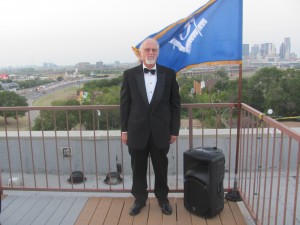
R to L: GM Wilbert M. Curtis, DGM Michael T. Anderson, GSW “Big” Bryce Hardin, GL Ivory Johnson
The Most Worshipful Prince Hall Grand Lodge of Texas recently held the Grand Master’s Table Lodge on an open air rooftop overlooking a view of downtown Dallas, Texas. The event was hosted by Metropolitan Lodge No. 146, Wor. Jerome D. Lacy presiding.
The Table Lodge is a tyled Entered Apprentice Masons Lodge. It harkens back to the Mother Grand Lodge of 1717 where one of the reasons for its formation was to hold the Annual Feast. Soon the Grand Master of that time directed there be installed into the ceremony the old, regular and peculiar toasts and health’s of Freemasons. Over time a Table Lodge became a prescribed ceremony with a ritual all its own.
Table Lodges in Colonial America were quite common as many Lodges actually met in taverns and a full course meal became part of “going to Lodge.” As the decades passed and a new century began, Table Lodges were continued as a way to promote fellowship, kinship and pride in Masonry.
“The Table Lodge had a most unusual pattern. Its entire meeting was conducted around the table, and the helpings of food and beverage were served in such a way they did not interfere with the other concerns of the Lodge. The arrangement of tables resembled a giant horse-shoe, with the worshipful Master in the East, at the center, and both Wardens in the West, at the opposite ends. The Lodge was opened with an invocation and closed with a song.”
“At first, there was an address, followed by many toasts and songs, but as time went by the lecture was omitted and the number of toasts and songs decreased. The final figure that was set for the toasts was seven, and in some Jurisdictions that number is still retained today.”
Under its skillful formula, the names of objects in the room were changed. The table was the Trestle Board, the cloth – the standard, the food – the materials, the glasses became cannons, the beverage – powder, the bottles – casks, the napkin a flag, forks were pickaxes, knives were swords, and spoons were trowels. To fill the glass was to “charge” it, and to drink it was to ‘fire’”.(1)
Today a Table Lodge has its own set of rituals, with its own particular opening and closing ritual as well as a seven course meal with seven toasts, one after each course.
The ritual of The Ceremony of the Seven Toasts is as follows:
Right hand to arms. (The right hand touches the glass).
Ready. (The glass is raised breast high, aim extended forward).
Aim. (The glass is brought to the lips).
Fire, Good Fire, Fire All. (All drink).
Present Arms. (The glass is brought to the second position in unison with the Worshipful Master, then the glass is brought to the left breast, then to the right breast, then again to the second position so that the movement makes a triangle. This triangle is made three times: then the glass is brought to the table in three moves – it is first carried a little to the left, then to the right and finally forcibly in unison to the table).
The Battery, three times three ( clapping 3X right over left, left over right, right over left). (Done)
ALL Vivat, Vivat, Vivat. (Right arm thrust upward with each Vivat).
Advance swords. (Knife is raised breast high, arms extended forward).
Poise swords. (Knife blade is elevated slightly, about 45°)
Salute with swords. (Knife handle is brought to within a few inches of the chin with the blade elevated about 45°)
Swords at rest. (Knife handles are carried in unison forcibly to the table – preferably in a flat position to prevent table damage).
The Battery, three times three. (Done)
ALL Vivat, Vivat, Vivat. (Right arm thrust upward with each Vivat).(2)
Wor. Jerome D. Lacy led us in all the toasts except the one to himself and other Worshipful Masters. The toasts were as follows: To the –
President of the United States of America
Most Worshipful Grand Master and the Most Worshipful Grand Lodge
The Worshipful Master and all sitting Masters
The Wardens and all sitting Wardens
Past Masters
Other Officers and visiting Brethren
To all Masons where-so-ever spread over the face of the globe
A great meal was had by all. The Table Lodge closed with all Brethren forming the Mystic Chain (arms crossed in front and clasped to the Brother to your right and left) and singing the ancient song written by Scottish Poet Laureate Brother Robert Burns in 1788– Auld Lang Syne.
Should old acquaintance be forgot
And never brought to mind
Should all acquaintance be forgot
And auld lang syne
For auld lang syne, my dear,
For auld lang syne,
We’ll take a cup o’ kindness yet,
For auld lang syne
 , teaches that there is always change. If this change is for the greater good of humanity, change does not need to be avoided.