Its Revolutionary History and Challenging Future
By Alain De Keghel.
New book coming in October, American Freemasonry: Its Revolutionary History and Challenging Future , by Alain de Keghel with forwards by Arturo De Hoyos and Margaret C. Jacob.
Freemasonry bears the imprint of the society in which it exists, and Freemasonry in North America is no exception. While keeping close ties to French lodges until 1913, American Freemasonry was also deeply influenced by the experiences of many early American political leaders, leading to distinctive differences from European lodges.
Offering an unobstructed view of the American system and its strengths and failings, Alain de Keghel, an elder of the Grand Orient de France and, since 1999, a lifetime member of the Scottish Rite Research Society (Southern U.S. jurisdiction), examines the history of Freemasonry in the United States from the colonial era to the Revolutionary War to the rise of the Scottish branch onward. He reveals the special relationship between the French Masonic hero, the Marquis de Lafayette, and the Founding Fathers, especially George Washington and Benjamin Franklin, including French Freemasonry’s role in the American Revolution. He also explores Franklin’s Masonic membership, including how he was Elder of the lodge of the Nine Sisters in Paris.
The author investigates the racial split in American Freemasonry between black lodges and white and how, unlike French lodges, women are ineligible to become Masons in the U.S. He examines how American Freemasonry has remained deeply religious across the centuries and forbids discussion of religious or social issues in its lodges, unlike some branches of French Freemasonry, which removed belief in God as a prerequisite for membership in 1877 and whose lodges operate in some respects as philosophical debating societies. Revealing the factors that have resulted in shrinking Masonic enrollment in America, the author explores the revitalization work done by the Grand Lodge of California and sounds the call to make Freemasonry and its principles relevant to America once again.
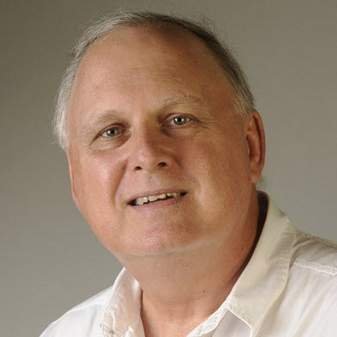
Alain de Keghel served as chair of the Supreme Council of the Grand Orient of France from 2002 to 2008. In 1994 he became a lifetime member of the Scottish Rite Research Society (Southern U.S. jurisdiction). The chair of an independent European Masonic Research Society, he has worked with the Philalethes Society in North America and with the research lodge Quatuor Coronati no. 8 in Germany. He is the former Consul General of France in Tokyo and Washington, D.C., and lives in Paris.
American Freemasonry: Its Revolutionary History and Challenging Future is published by Inner Traditions – Bear & Company. More on American Freemasonry, on the web.
Do you have Masonic news or an event to share? Let us know here Contact.